When Small Hands Plant: Involving Children in Memorials
Practical, age-sensitive ways to include children in a memorial tree planting so they can grieve, remember, and find active ways to hold a life in memory.
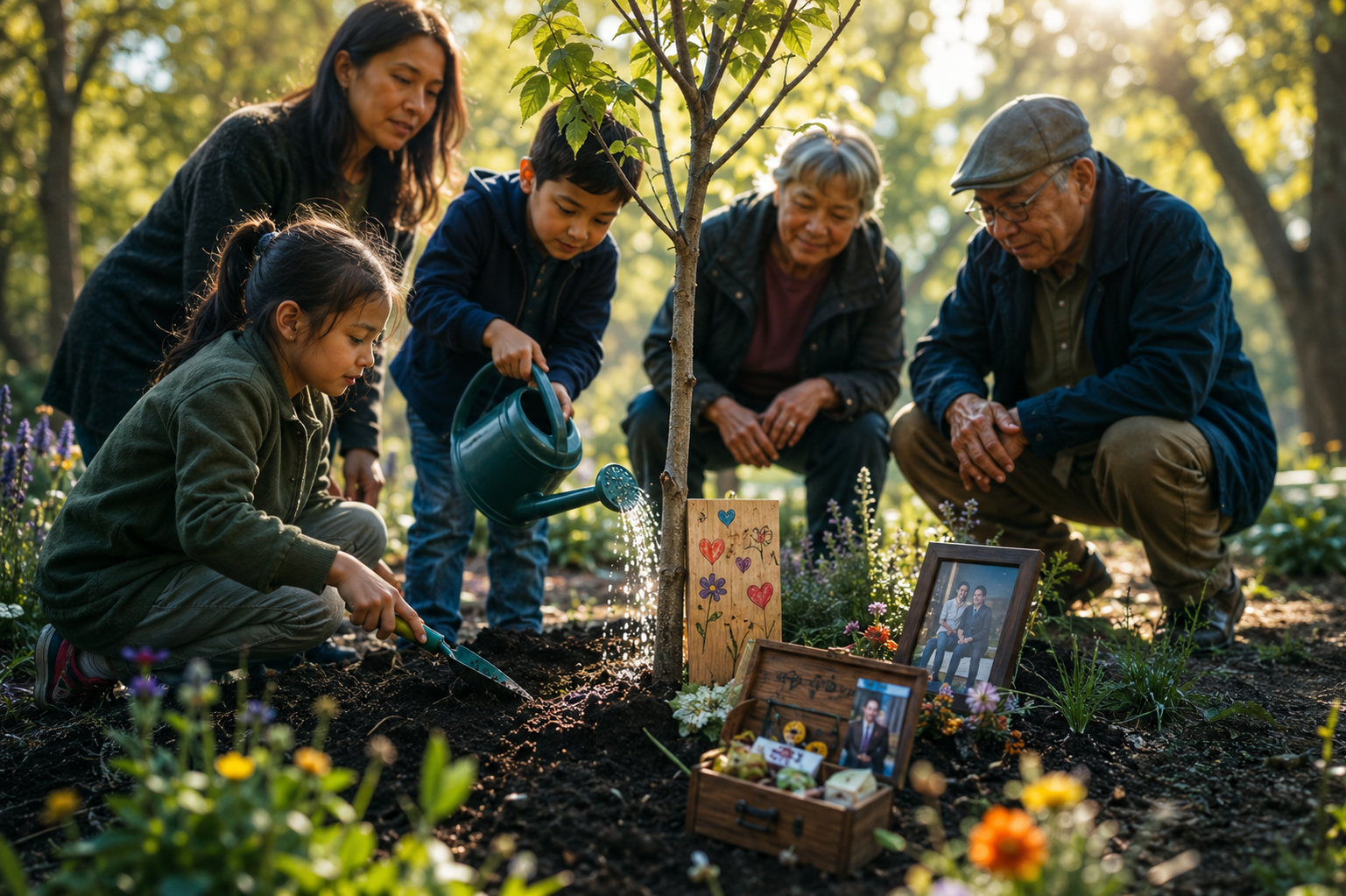
On a cool morning, a child with sticky palms is asked to dig a small hole. The shovel feels too big. The grown-ups speak softly, as if lowering their voices will make the world behave. The child looks at the dark soil, then at the small root ball, and asks one simple question: "Will it grow?" That question is the start of a different kind of ritual, one that asks less of explanation and more of being present.
Why include children in a living memorial
Children notice in a different register. They do not need the polished words adults use. For a child, planting a sapling is a gesture that matches their scale. It lets them perform an act that is visible and repeatable. That repeatability matters because grief does not always resolve in a single conversation. A young child can return to the same patch of ground each season and see a measurable change, and that change becomes a gentle story to hold.
Practical steps to include children, by age
Matching the task to a child’s developmental stage keeps the moment accessible rather than overwhelming. Below are simple, concrete suggestions that respect a child’s capacity while creating memory.
Young children (toddlers to early elementary)
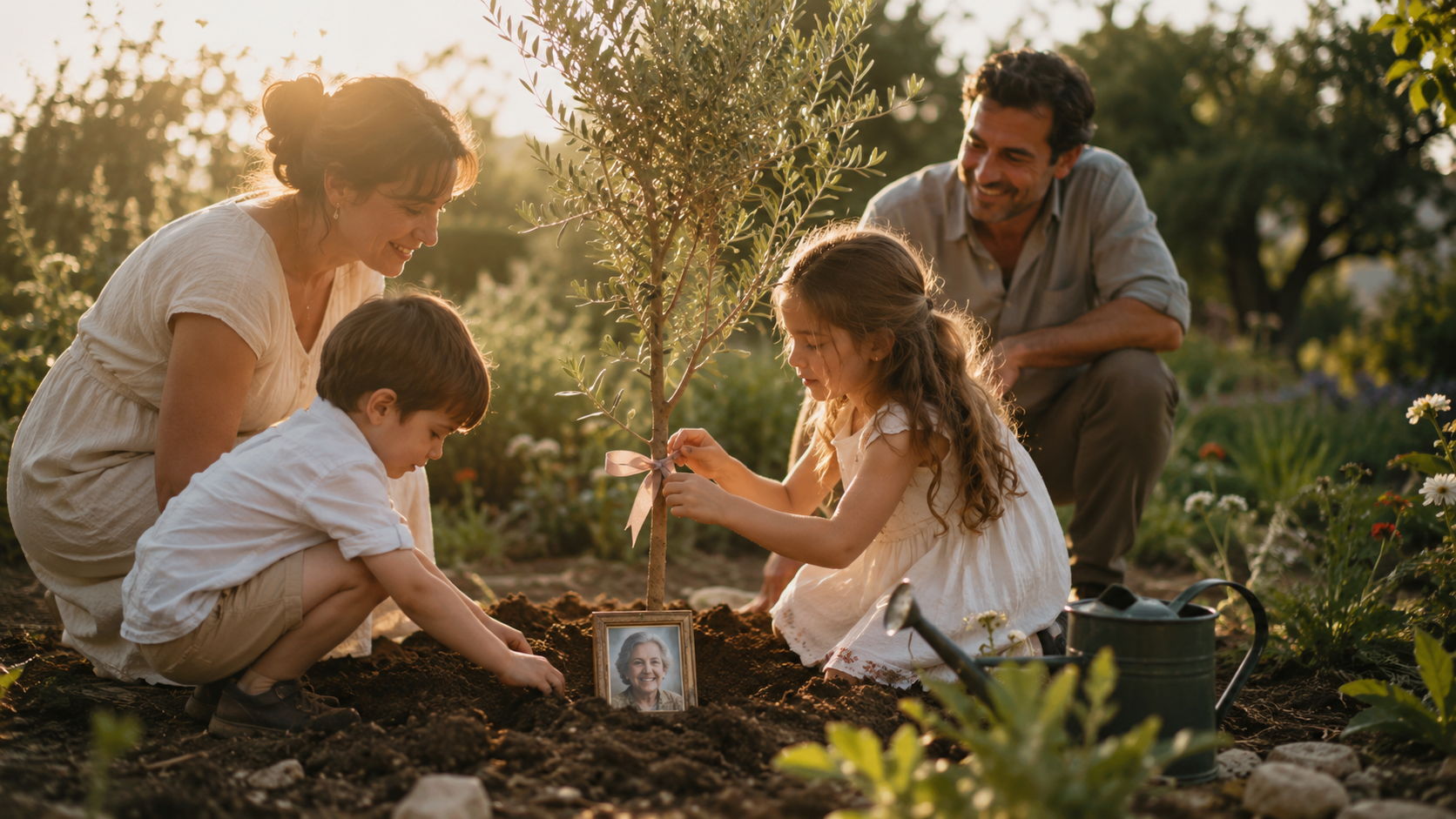
Let them help in small, tactile ways. Hand them a small trowel, ask them to press soil around the root, or give them water in a safe, lightweight cup. Use simple language. A short phrase like, "We are planting a tree to remember Nana," followed by a quiet minute, is enough. Repetition helps: make a short ritual they can perform on birthdays or anniversaries.
Older children (late elementary to teens)
Offer choices and responsibilities. Older kids can help choose a plaque inscription, collect small mementos to bury gently at the root, or keep a yearly photo diary of the tree as it grows. Encourage them to design a small, private ritual that feels meaningful to them alone, whether it is leaving a pressed flower, reading a line from a favorite book, or recording a short message to be played when they visit.
What to say and what not to say
Language shapes the memory you are building. Avoid euphemisms that a child will interpret literally. Instead of saying, "Grandma went to sleep," choose clear, simple words such as, "Grandma died. We will miss her. We can plant a tree to remember her." Allow for silence. A child’s question may be small at first and then return months later. Answer briefly and honestly, and then offer the ritual again.
Activities that help children make meaning
- Plant a hand-sized marker: a small wooden stake with a name that a child can decorate.
- Create a seasonal task: assign watering to a child for spring, leaf-clearing in autumn, and a short note each birthday.
- Make a memory box: let the child choose one small item to place near the tree each year.
- Keep a photo timeline: take a picture each year on the same day to show growth and time passing.
- Design a small acknowledgment ritual: a single phrase to say aloud when visiting, kept short and specific.
Three reasons a living memorial helps young mourners
- A presence that lasts: A tree gives a child a place to return to. Unlike a single event, it offers a living continuity that can be visited across seasons and years.
- Action over helplessness: Involvement transforms passive sorrow into an active task. Children who plant or care for a sapling learn they can do something to honor a person they miss.
- Concrete growth as a narrative: Watching a sapling become a small tree gives a child a visible story of memory and change. It links the idea of remembrance to something observable and repeated.
How to prepare the family and the site
Choose a species suited to the climate and locale. An olive or an oak may feel meaningful for their associations, but local conditions and long-term care should guide the choice. Talk to the steward of the land you choose about ongoing care, access, and any permissions required. If planting in a shared grove, discuss how the site will be tended and who will be responsible when the child grows up and relationships change.
Practical checklist for the day
- Bring child-sized tools and gloves.
- Pack a small comfort item the child can hold during the ritual.
- Prepare simple language to explain what will happen.
- Plan a brief, repeatable step like watering or pressing soil.
- Take a photo and label it with the date for a memory album.
Longer-term care and who looks after the tree
Before you plant, understand who will care for the sapling in the first years. Trees need water, protection from pests, and sometimes pruning. If a family expects to move, consider a planting site where a community steward or partner organization will continue care. That stewardship is not just practical; it is part of the promise you are making to the child that the memorial will remain a place to return to.
Including children when distance is a factor
If family members live far apart, create shared rituals that do not require physical presence. A child can record a short message about a memory and upload it to a private family album the day they visit. Another family member can post an annual photo with a one-sentence note. The tree becomes a hub not only for physical visits but for small exchanges that keep the memory active across distance.
Resources and gentle rules for adults
Adults must follow the child’s lead. If a child becomes upset, pause the activity and offer comfort. Keep rituals simple and repeatable. Avoid putting too much pressure on the planting to be the only thing that heals. The goal is to offer a place and a practice a child can return to, not to promise that a tree will take away the pain.
Closing: a small invitation
Planting a tree with a child is not a cure, and it is not a requirement. It is a way to translate love and memory into something that grows. Some families find that a living memorial becomes an archive of small acts: a shell tucked at the root, a note folded into a tin, a single pressed leaf each year. For those looking for a lasting option, consider how a planted tree can be a place to bring stories, small objects, and seasonal attention. Learn more about respectful planting and locations at https://sentitree.com/memorial-tree-gift and find planting locations at https://sentitree.com/locations.
Next step
If including a child feels right, start with one small, repeatable action today: press soil with little hands, say one sentence, and take a photograph. That simple scene can become a memory that grows with the tree.
Plant a tree in their memory
A lasting memorial that grows for generations, with a GPS certificate.
Plant a Memorial Tree →