A Tree to Hold a Grandparent’s Recipes and Stories
A practical guide for families who want to preserve a grandparent’s recipes and stories using a memorial tree, simple rituals, and a family cookbook archive.
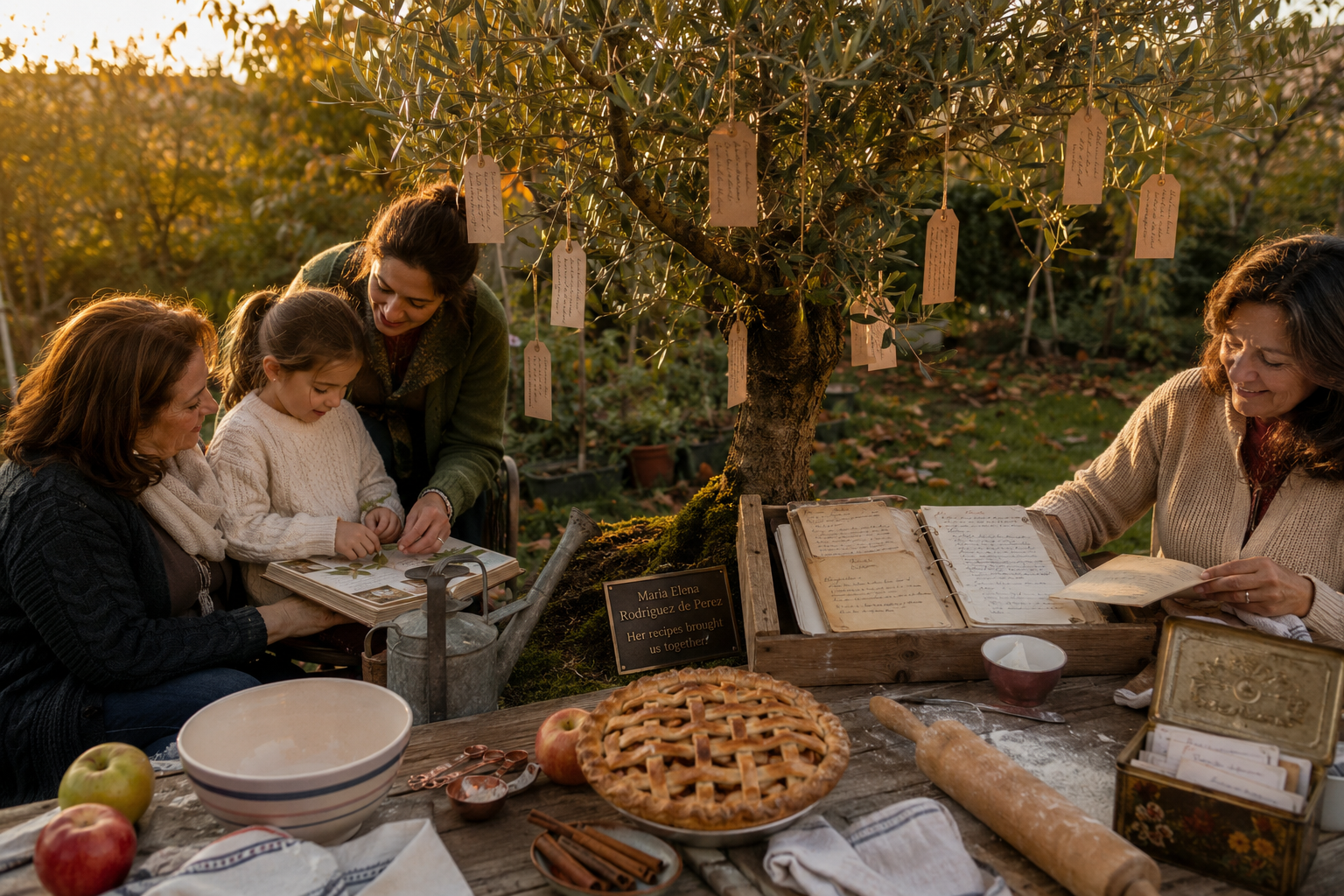
I remember a kitchen that smelled like cinnamon every winter. When I opened the old tin, a single card fell out, still stained with oil and written in a looping hand. That card carried more than a recipe. It carried a voice, a way the family used to gather. A memorial tree can do the same thing. It can make a place where those small, ordinary traces are allowed to live, and where grandchildren can return with spoons, pages, and questions.
Why pair a tree with recipes and stories
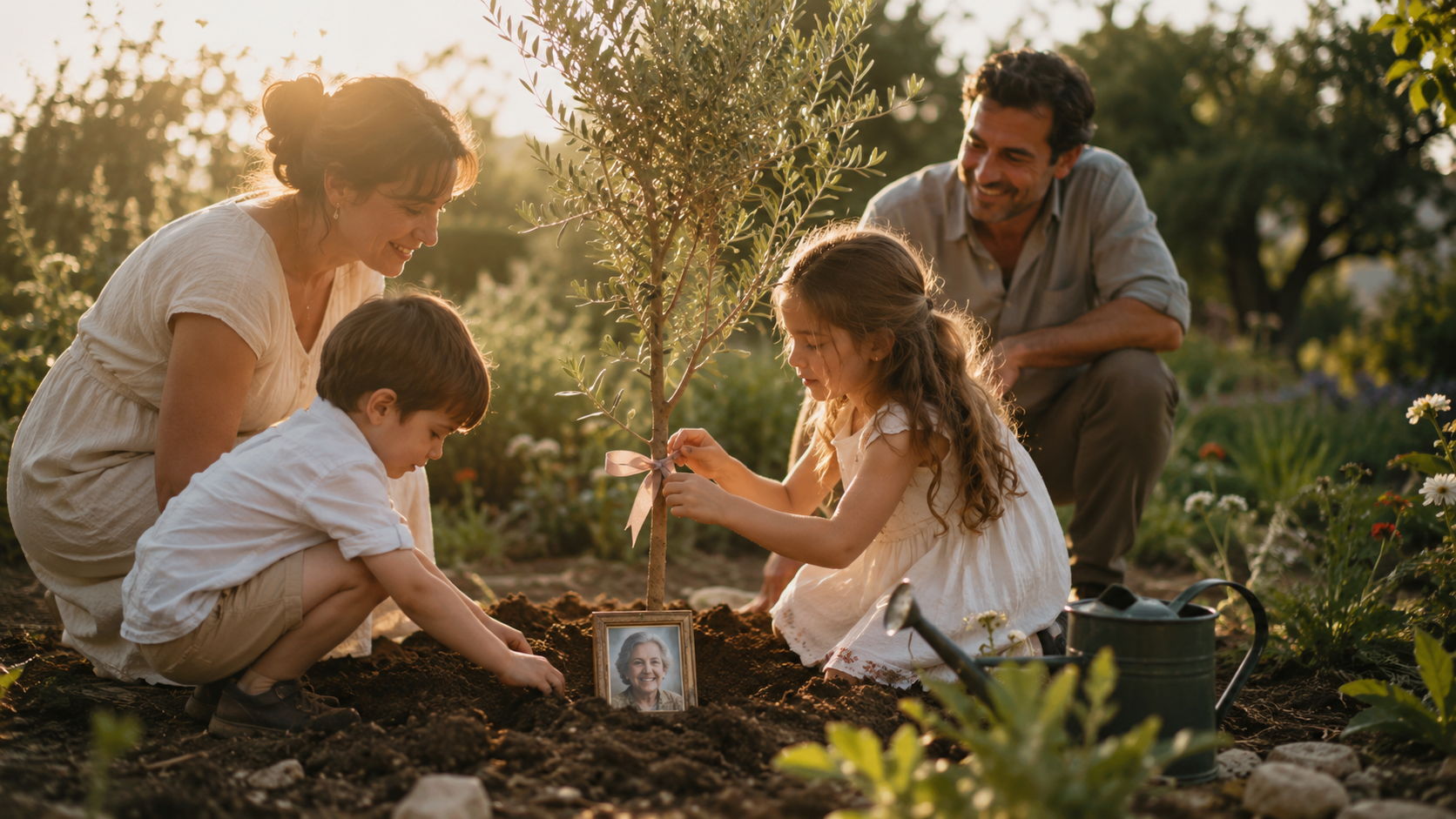
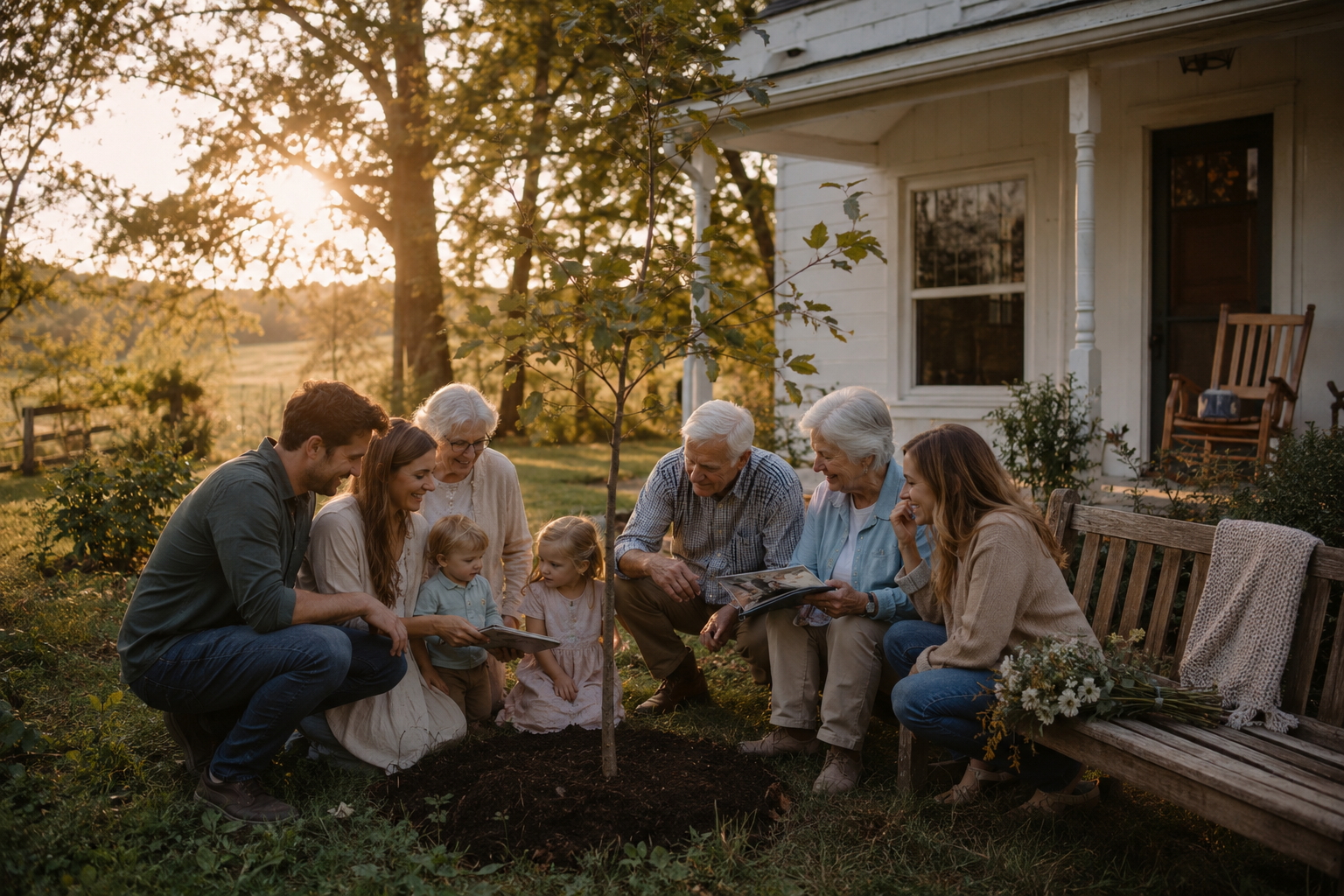
Planting a tree as a living tribute changes memory from an idea into a place. A recipe card is a recipe, but a tree gives those cards a landscape. When children and adults return to the same sapling year after year, the acts of tending and cooking become connected. The tree becomes a physical marker for the family archive, a place where a story is not only told but anchored to the land.
Choosing the right tree and the right object to pair
Practical choices matter. Think about climate, space, and how people will visit. Olive and oak have strong meanings: olive for peace and continuity, oak for strength and endurance. But more important than symbolism is fit. A smaller shade tree or a potted specimen is better if the site must move with the family. Nearness matters if children are part of the ritual; an accessible tree invites hands and recipes to come together.
Species and meaning
I have seen families choose an olive for its quiet association with peace and longevity, and an oak for its sense of rooted strength. Those messages can be useful when you want the tree to speak in a single image. Still, what the family does at the tree each year will shape its meaning far more than the botanical label.
Setting up a family recipe-and-story ritual
Make the plan simple so it actually happens. The ritual I recommend has three parts: collect, anchor, and return. Collect recipes and short stories. Anchor one small visible token at the tree. Return at a chosen season to read, cook, and remember.
- Collect family recipes in a central place. Scan or transcribe old cards and keep an illustrated binder at home so younger family members can read easily.
- Create memory tags. Ask each relative to write one short memory or note to hang on the branches during a visit.
- Choose a durable weatherproof plaque or a small box at the tree base to store a sealed note or index card with the grandparent’s full name and a short line about the recipes.
- Pick an annual date small enough to sustain: a birthday, a holiday meal, or the day the first pie was baked. Keep it brief.
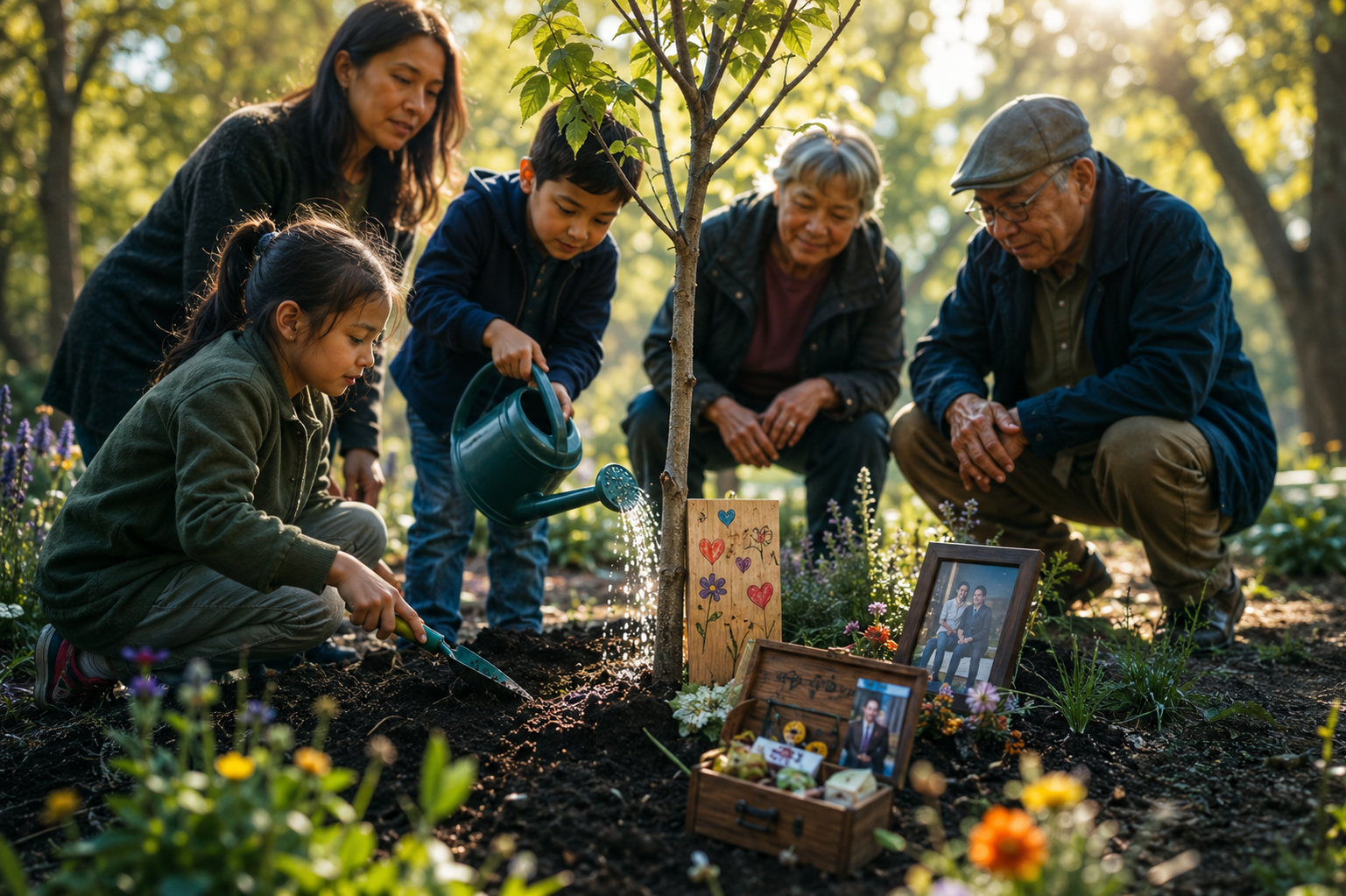
- Invite children to take a single, supervised task, such as pressing a leaf into a journal or helping mix a simple dough, so they feel useful and included.
How to make a cookbook that travels with the tree
There is a non-obvious trick I recommend: keep the full recipes in two places. One is a family cookbook, a binder or printed booklet kept at home. The other is an index system at the tree site: a small, weatherproof card with a recipe title and a reference code that links back to the family book or a shared online folder. That way, the tree remains light on upkeep but still points to the archive if someone wants the full instructions.
Three reasons to use a living memorial for family recipes
- A living address: The tree gives a specific place to return to with recipes, photos, and small tokens, helping memory feel anchored rather than floating.
- Intergenerational learning: When children help with a planting or a simple cooking task, they learn a recipe the way stories are passed on—by doing, not just by hearing.
- Continuity without pressure: A tree allows repeated, short acts of remembrance that invite ongoing care without demanding public spectacle.
Practical care and permissions
Check planting rules if the site is not private. If the family rents, a large potted tree or a managed grove can be the better option. For families who worry about long-term care, a managed planting in protected land is a helpful alternative. If you choose an off-site program, keep the index card and family cookbook at home so the recipes stay accessible even when travel is difficult.
Inviting children without overwhelming them
Children notice details. Give them small roles that can be repeated: stirring a batter, placing a single leaf in a scrapbook, or writing a name on a memory tag. Keep explanations short and concrete. Instead of saying why we remember, show how: we plant, we cook the pie together, we read the note aloud. The routine is the point more than the speech.
Simple examples to start with
One family I know paired a small lemon tree with a binder of their grandmother’s citrus cakes. Each year they squeezed a lemon at the tree and baked two small loaves one for a neighbor and one for the family. Another family hung recipe-title tags shaped like spoons and kept a matching booklet with scanned handwriting at home. Those simple acts turned a set of dishes into a living practice.
Closing and a gentle option when care is a concern
If ongoing care is an obstacle, consider a managed planting or conservation project that plants and nurtures the tree on protected land. That approach keeps the memorial alive without passing the burden of maintenance to a single household. For families who want help with planting in a cared-for location, some choose to plant a memorial tree in a managed grove, where the tree keeps growing and the family keeps the recipes and stories at home.
Where to begin
Start with one card and one small visit. Gather a few recipes, make a simple binder, and pick a single date for the first check-in. The point is not a perfect archive, but a steady practice that children can return to as they grow. If you want the living memorial to be managed and recorded, you can find programs that plant on protected land and provide a digital certificate with location details. For more information, visit https://sentitree.com.
Plant a real tree for someone you love
A living gift with an instant personalized certificate and the tree's GPS location.
Build Your Legacy Tree →