When There Is No Funeral: Planting a Quiet Memorial Tree
If a loved one asked for no funeral, a memorial tree can be a private, lasting way to honor them. This guide explains etiquette, ashes handling, and practical steps.
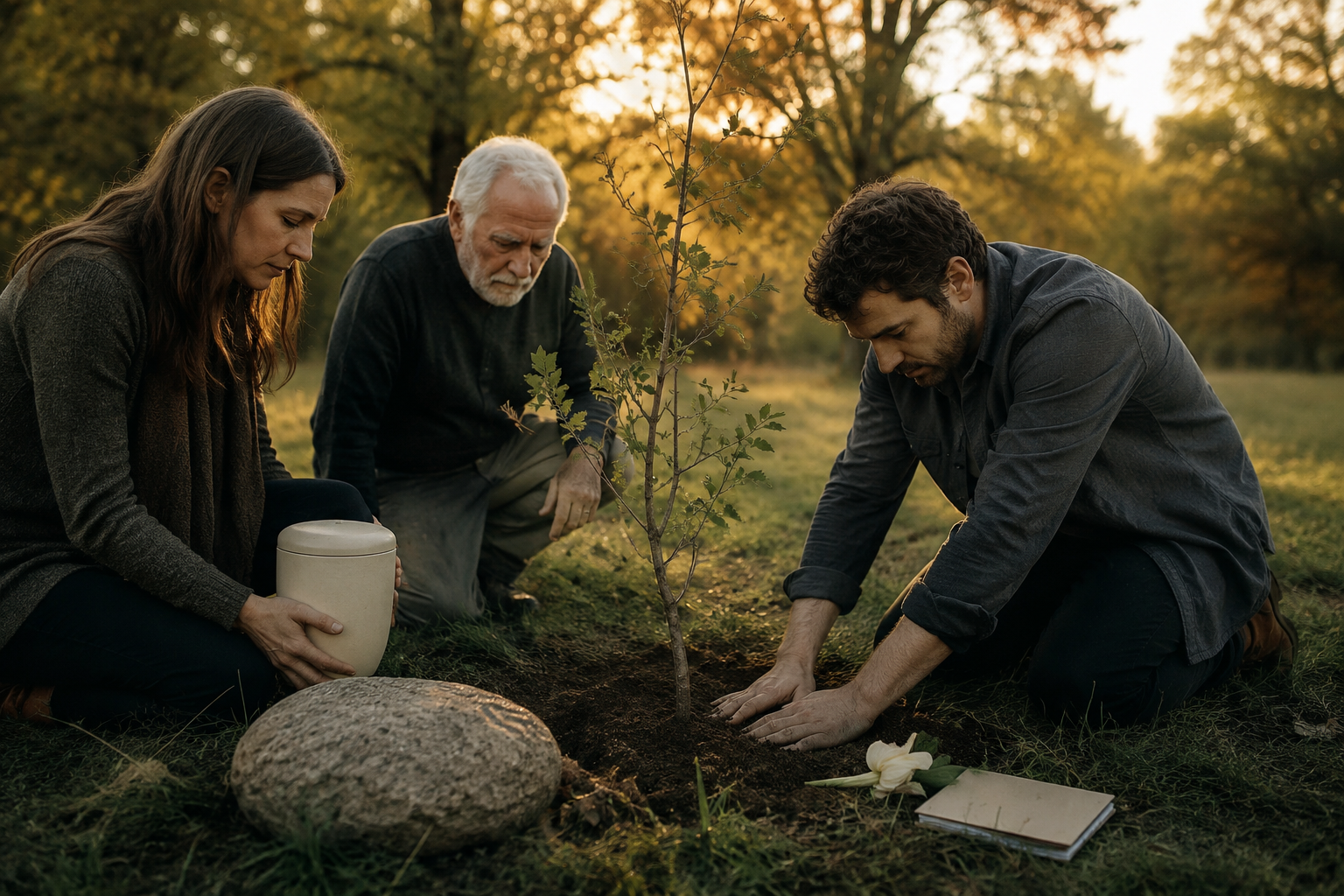
The letter she left was short. “No funeral. If you want to remember me, do it quietly.” For many families, a clear wish like that can land like a map and a lock at the same time. You want to honor the person, and you also want to respect what they asked. Planting a memorial tree offers a way to do both, a gesture that is private at its heart and durable in its effect. This piece walks through what that option looks like in practice, how to keep it modest, and the specifics you should know if ashes are involved.
Why a tree fits when there is no funeral
A memorial tree answers two needs at once. It is not a public event, and it does not demand performance. It creates a place to return to, a quiet point of presence that does not require a service, speeches, or a guest list. Families often tell me they wanted something that could be visited in private, on plain days, not only on anniversaries. A tree can hold those small, private visits in a way an online post cannot.
Practical etiquette for honoring that request
If someone explicitly asked for no funeral, the guiding rule is to keep the response proportionate and private. That principle shapes choices about who to invite, whether to make a public announcement, and how large any marker should be.
Keeping it small, clear steps
First, discuss the idea with the closest next of kin. If the wish was recorded, follow it. If family members disagree, choose a small, private planting first, and consider a later, quiet acknowledgment if needed. Second, check land ownership. If you plan to plant on private property, get written permission. If you choose a memorial forest or conservation planting, read the organizer’s rules about markers and ceremonies. Third, be explicit about the tone. If the person wanted no public ceremony, mark the planting as invitation-only or for family only.
Options when ashes are involved
Cremated remains complicate the question because they are not neutral soil. I looked for practical guidance. Experts consistently recommend avoiding burying a large quantity of ashes directly at a sapling’s roots because unbuffered ashes can stress young roots. Safer approaches include using a biodegradable urn designed for tree plantings, placing only a small portion of ashes near the tree with the rest kept elsewhere, or choosing conservation projects that accept ashes with appropriate handling.
- Biodegradable urns made for saplings
- Dedicated memorial forest programs that accept ashes
- Placing a token amount of ashes in the planting hole, not the whole urn
- Keeping ashes in a family memorial box and marking the tree without burial
Choosing the right species and place
Choice of species should be practical, not symbolic alone. Think about the climate, soil type, and the mature size of the tree. A small urban yard is not a place for a large oak, and a sapling in a drought-prone region needs a species suited to low water. If you want symbolic meaning, olive suggests peace and long life in some cultures, and oak suggests strength. Make sure the chosen site will remain accessible to family members over time, and that the tree will not be at risk from future development or land-use change.
How to mark the planting without making a spectacle
A discreet plaque, a simple stone, or a durable tag can be enough. If the family does not want a marker at all, consider creating a private digital record with the GPS coordinates and sharing it only with family. If a small gathering is held, keep remarks brief and intimate, and avoid social media announcements that would contradict the person’s wish for privacy.
Specific, modest ways to honor the wish
Below are concrete options you can use as a checklist when someone asked for no funeral. Each is intentionally modest, and each preserves the private tone of the request.
- Private plant and pause: Plant a sapling with only immediate family present, let each person spend a few quiet moments near the tree, and then leave without a public announcement.
- Marker-free memory: Plant a tree without a physical plaque, and keep a private note or certificate with the family, so the site remains personal rather than public.
- Shared stewardship: Arrange a small, annual check-in among a few relatives, such as watering on the anniversary, which keeps the memory active without a ceremony.
Who to tell, and who not to tell
Not everyone needs to know. The smaller the circle, the more likely the original wish will be respected. Tell those who were closest, and consider writing a brief note that explains the reason: that the person asked for no funeral and that the family chose a quiet tree planting as an alternative. If someone insists on holding a public event, explain the original request calmly and offer a modest alternative that preserves privacy.
Timing and logistics
Plan the planting when weather and local planting seasons are favorable. If the family prefers immediate action, a sapling can be planted within days, but the best long-term outcomes come from timing the planting to the local planting season. For families with limited time or who live far apart, many memorial forests or planting partners will accept the request and handle the planting on behalf of the family, often providing a certificate with GPS coordinates. If you go this route, keep the paperwork and permissions simple and clear.
A practical non-obvious point
Many people assume a private planting means solitude only, but a quiet living memorial can double as a living timeline. You can attach small notes or plant seasonal bulbs around the tree on different anniversaries, giving the family ways to remember without publicity. That practice creates a string of private rituals that respect the original wish, and that also gives future generations ways to connect with the memory in small, repeatable acts.
Closing and a gentle next step
Respecting someone’s wish for no funeral does not mean forgetting them. A modest, well-considered tree planting can be private and lasting, giving family members a place to sit, to remember, and to act, without contradicting the deceased’s request for a simple farewell. If a family wants a guided option, it is possible to plant a memorial tree through established programs that handle the details and keep the ceremony private. For families who prefer to handle the planting themselves, a simple checklist, a modest marker, and permission for the land will keep the action true to the original wish. For information about options and practical steps, visit Sentitree.
Plant a tree in their memory
A lasting memorial that grows for generations, with a GPS certificate.
Plant a Memorial Tree →