Honoring a Veteran's Birthday with a Living Memorial Tree
Ways to mark a veteran’s birthday with a living memorial tree, practical steps for choosing species, ceremonies, and how to involve family in a quiet, lasting tribute.
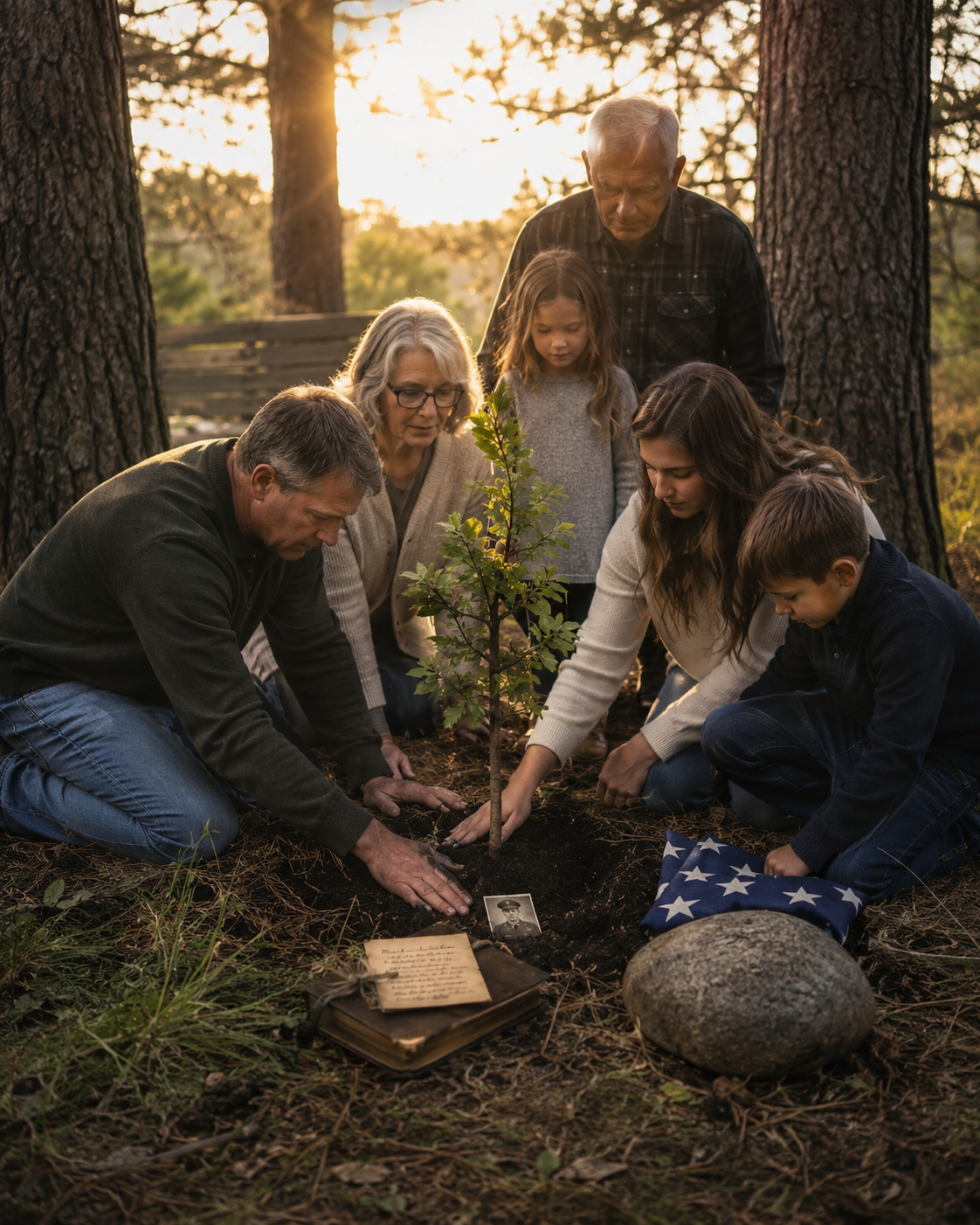
On the first birthday after his discharge, the family found a small patch of light between two pines and a place to plant something that would keep growing when the parties stopped. They buried a folded photo under the soil, pressed a hand into the damp earth, and stayed until the sun lowered. Planting felt like doing something that matched the weight of the day. It did not erase what had been lost. It simply gave that day somewhere to return to.
Why a birthday matters after service
Birthdays are ordinary anchors in the calendar. For a veteran or for those who loved one, a birthday can also become a measure of time—what has changed and what remains. Honoring a veteran’s birthday with a living memorial reframes a single day, turning it into a place to gather memory and ritual across years. It moves a private feeling into something physical and repeatable. That matters because repetition gives permission to keep feeling and to keep remembering without performance.
Practical ways to mark a birthday with a tree
Not every birthday needs a ceremony. These options range from private gestures to small gatherings, so you can choose what fits the person and the family.
- Plant a sapling in a meaningful place, then leave a small engraved stone or tag near the base for the first year.
- Dedicate a tree through a veterans’ tribute program or local memorial grove, which can link the birthday to a public act of remembrance.
- Hold a brief birthday dedication: a few remarks, a photo passed around, a folded flag or a song that mattered to them.
- Create a yearly ritual of leaving a note or a token at the tree on the birthday, such as a short letter, a photo print, or a small, weatherproof token.
- Plant a tree at home if the veteran lives nearby. That allows visits, care, and the chance to see the memorial through seasons.
Choosing the right tree and place
Species and site matter in straightforward ways. A veteran’s life, health of the soil, and the intended scale of the memorial will all shape the choice. Think about the long view. Some trees grow slowly and stand compact. Others become large and offer shade, a place to sit, or a quiet canopy for family visits.
Species and symbolism
Oak suggests strength and endurance. Olive suggests peace and a long life in some traditions. Maples and redbuds carry seasonal color and can offer a visual sign of each birthday passing. If the veteran or the family had a favorite landscape, follow that memory. If the tree will be visible from the house or a path, choose a species that fits the space and requires care you can provide.
Three reasons a living memorial suits birthdays
- A presence that lasts: A tree continues to grow and change each year, which creates a living record you can revisit on future birthdays.
- An action that honors: Planting or dedicating a tree is a concrete gesture that family members can participate in. It removes the pressure to find perfect words while giving everyone a shared, physical act to hold.
- A place for small rituals: A tree becomes a location for short, repeatable acts that mark the day—returning flowers is optional. A single bench, a flag, or a card left at the base can become a quiet custom.
How to involve family without making it heavy
Family involvement need not be a formal program. The point is to invite memory, not to force it. Small tasks help people feel useful and connected. One person can handle the tree care, another can keep a note book of memories, a younger child can paint a small stone, and an older relative can read a short passage each year. Keep gatherings short and simple. A deliberate, brief structure helps avoid the feeling that everyone must perform sorrow on a schedule.
Logistics, care, and etiquette
Planting a tree involves practical steps. Choose a native or climate-appropriate species when possible. Prepare the site, follow recommended spacing, and water the young tree regularly through its first seasons. If the tree is dedicated in a public grove, check any program rules about plaques, visits, and upkeep. If you plan a plaque, keep the text short and specific to the birthday moment rather than a long biography. Simple inscriptions age better and allow the tree to remain the focal point.
When a veteran is still alive
If the veteran is alive, ask whether they want a public dedication. Some will prefer a private, small planting at home. Others will welcome a small birthday ceremony with a few friends. The key is consent. Framing the act as a gift for them and not a ritual about loss keeps the day rooted in their life.
Ideas that make a birthday visit feel like a ritual
These are small, repeatable actions that prevent the day from fading into silence.
- Read a single paragraph from a letter or a short anecdote that recalls a small habit or joke.
- Leave a small, weatherproof keepsake such as a metal token, a laminated photo, or a hand-written card in a sealed bag tucked into a pocket of the base stone.
- Share a single song line or a toast. Keep it brief and optional for anyone present.
- Plant a companion perennial each birthday, so the ground around the tree changes with the years.
- Record a voice memo with a short memory and save it in a family archive labeled with the date of the birthday.
When distance or rules make planting impossible
If you cannot plant locally, consider dedicating a tree through a veterans’ tribute program or an organization that will plant on your behalf. These programs often provide a certificate, GPS location, or a way to track the tree’s growth from afar. A digital certificate, a mapped location, or a small plaque in a memorial grove can still give the birthday a place to land. For many families, it is enough to know there is a living presence planted in the veteran’s name.
Keeping the memory alive between birthdays
Memory is built in repetition. A tree gives the family permission to return. You can set modest, yearly habits that make the birthday more than a single day: a short note left on the tree, a family photo taken in the same spot each year, or a shared recipe prepared for a quiet meal. The goal is not to pull people into sorrow. The goal is to create a stable place in the calendar where memory is allowed to appear.
Where to begin today
Start small. Find a quiet place to stand, imagine what would feel honest for the veteran, and choose one action you can complete this year. You might plant a sapling in a backyard, order a dedication through a memorial tree program, or simply write a short letter that you will bring to the tree on the birthday. If you are looking for organized options to plant a memorial tree, consider programs that handle planting and documentation so the tribute is both living and lasting, such as an option to plant a memorial tree in a dedicated grove.
Honoring them in the years ahead
Birthdays will come and go. A living memorial does not remove the difficulty of those days, but it gives the family an external place to hold a feeling, to return, and to mark time in a way that is gentle and ongoing. If it feels right, visit, add a note, or bring a small token. If not, allow silence too. The presence of a tree asks for nothing and gives a place to place the memory when you choose.
Make a quiet start
Choosing to honor a veteran’s birthday with a living memorial is an invitation to continuity, not a performance. If you would like help with programs that plant trees and provide a recorded dedication, visit Sentitree for options and details.
Plant a tree in their memory
A lasting memorial that grows for generations, with a GPS certificate.
Plant a Memorial Tree →