When a Sibling You Were Estranged From Dies
Practical, gentle guidance for people facing a sibling's death after a long estrangement. How to choose a memorial that fits the real relationship and what to do now.
The phone call came at 9 a.m. There was a name you had not heard in years and a small, strange weight that settled in your chest, equal parts shock, relief, and some thing you cannot name. For a week you will find yourself answering two questions at once: what do I feel, and what am I allowed to feel?
Naming the mixed feelings
When a sibling dies and the relationship was fractured, grief is not one thing. Guilt, anger, unresolved conversations, and quiet curiosity can exist together. Naming those feelings helps; it gives a place to set them down so they do not keep vibrating in every small decision you make that week. Say the words aloud, write them in a note, or tell a trusted friend. The point is not to solve the past but to acknowledge its presence.
Practical choices in the first days
There will be logistics: calls from family, funeral dates, offers of support. Take a breath and choose boundaries now. Decide whether you want to attend the funeral, send a message, or hold a private moment alone. Any of these options can be right. If you do choose to attend, plan one short thing to do that is for you alone. If you will not attend, prepare a brief statement you can share with others so you are not put on the spot.
Memorials that fit an estranged relationship
Traditional public ceremonies assume close ties. When ties are broken, smaller gestures often feel more honest. Below are grounded, specific alternatives that let the memory exist without asking you to rewrite the history.
Private rituals you can return to
A private ritual does not need permission or an audience. It is a small, repeatable action that holds the fact of a life without forcing reconciliation. You might light a candle on the anniversary, keep a single photograph in a drawer you open once a year, or make their favorite meal on a day you choose. These acts create a steady place to go when public rituals feel wrong.
- Write one unsent letter that says what you did not say, then seal it in an envelope and put it somewhere safe.
- Plant a small potted plant at home and tend it on birthdays or anniversaries.
- Make a playlist of songs that remind you of them and listen to it once a year.
- Donate to a cause that felt important to them, in their name.
- Choose a single object to keep, a token that anchors memory without claiming intimacy.
Practical steps for shared family pressure
If family members expect you to act a certain way, set clear boundaries. You can say, I need a few days to think and I will let you know. If you are asked to speak at a service and cannot, offer a short written note they can read. Boundary setting is not refusal of grief; it is a way to grieve on terms you can live with.
Why a living memorial can feel different
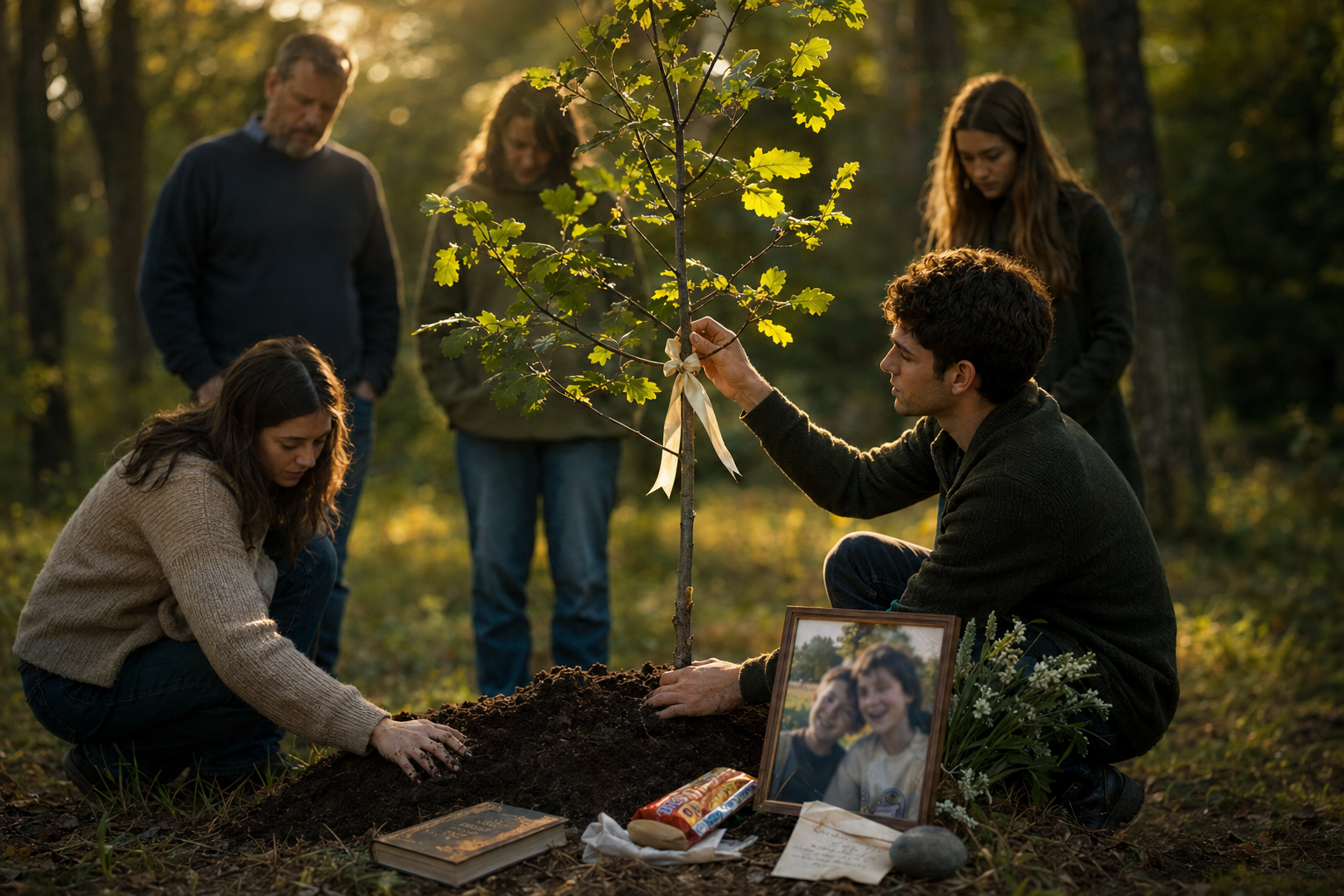
For some people, a living memorial like planting a tree matters because it separates the memory from the family theater. A tree carries the fact of a life into the future without asking for a tidy story. It can be private, it can be public, or it can be a small ritual only you perform. If you consider this, think about species and place in practical terms. An olive is often chosen for quiet, enduring presence. An oak reads as strength. Choose what would have mattered to them or pick something local and easy to care for.
- Lasting continuity: A living memorial grows slowly and steadily, giving a place to visit that changes with the seasons and does not demand immediate reconciliation.
- Privacy by design: Plantings can be done privately or with a small group, which is helpful when public gatherings would reopen old wounds.
- Action that honors: For people who want to do something concrete, planting a tree or making a small donation ties grief to an outward act, which can help when feelings are tangled.
How to tell others what you need
If you decide to grieve privately, you will likely have to explain that choice more than once. Keep a short script ready. You do not owe anyone a long explanation. Simple language respects both your limits and the family's need to be informed: I loved them in my own way, and right now I need to grieve quietly. If pressed, say you will reach out when you are ready.
When to seek support
Mixed feelings do not always resolve on their own. If guilt or unresolved anger keep surfacing, consider speaking to a counselor or a grief support group. There are resources specifically for complicated grief and for people grieving an estranged relationship. A clinician can help you sort what belongs to the past and what needs tending today.
Practical checklist to close this week
These steps help turn overwhelming decisions into a manageable list.
- Decide attendance. Say yes, no, or request time to decide.
- Prepare a single private ritual you can perform if public options feel wrong.
- Write an unsent letter and store it somewhere safe.
- Choose a memorial action: a small plant, a donation, or a yearly ritual.
Closing and a quiet option
If a living memorial feels right, planting a tree can be a way to give continuity to a presence you could not fix while they were alive. It does not require family agreement. It asks only that something grow.
For those who want a practical option to consider, you can plant a memorial tree and receive a record of where it is planted. The site also lists species and locations to help you choose a place that makes sense for you.
Take one small step now
Open a notebook. Write the first line of the unsent letter. Pick the date you will return to it. Grief rarely arrives in neat packages; a small action today buys you space to feel what follows.
Send something that lasts instead of flowers
A living sympathy gift with an instant personalized certificate.
Send a Sympathy Tree →