What to Send After a Suicide Loss
If someone you care about lost a loved one to suicide, small, practical gifts and steady presence often help more than words. Here are gentle, specific options and what to avoid.
The phone call comes and the room you are in feels too small. You want to reach out, to offer something that says both I see you and I will be here, but you are not sure what will be received. For many people grieving a suicide, a low-pressure, practical gesture is easier to accept than an offer that demands emotional labor. I wrote this to offer clear, gentle options you can send or do right away.
Why ordinary condolence gifts can miss the mark
Flowers and platitudes can feel thin after a suicide. The grief that follows is often mixed with shame, unanswered questions, and a wary privacy. A bouquet arrives, it is noticed, but it does not change laundry, a sleepless night, or the empty seat at a kitchen table. Practical help, a short written name for the person who died, and repeated, quiet follow-up tend to matter more over time. That is not to say you should never send flowers; it is to say choose gestures that lower friction for the bereaved.
Concrete things to send first
When you need to act quickly, consider these low-pressure, useful gifts. Each one is easy to receive and does not require the grieving person to perform emotional labor.
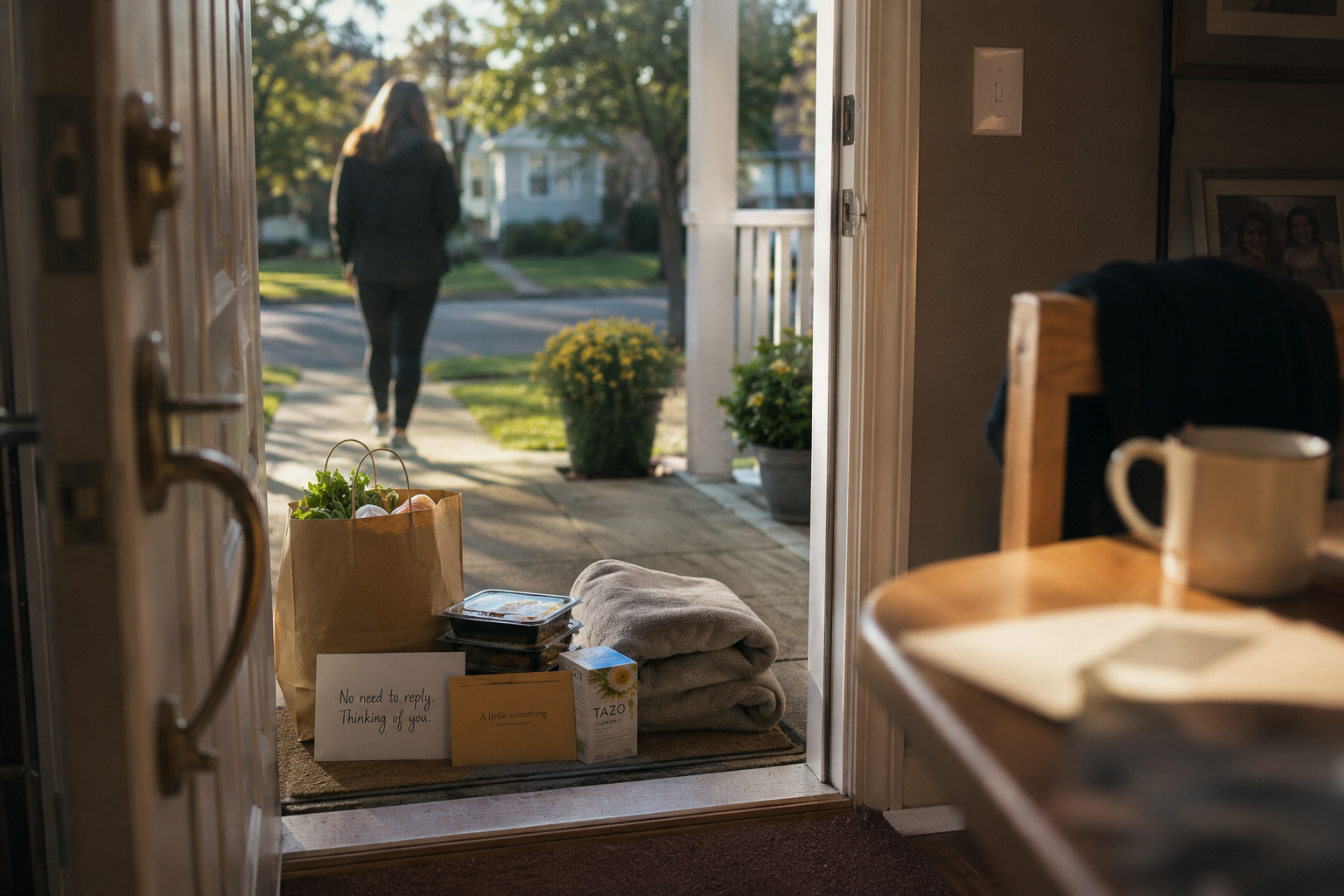
- Delivered meals or a grocery delivery paid for, with a note that says "No need to reply."
- A care package with calming items: tea, a soft blanket, a simple journal, and instructions for a no-questions return address.
- A short, handwritten card that names the person who died, for example: "I am so sorry about Maya. I remember her laugh."
- Offer cards for concrete help: "I can pick up the kids on Tuesday," or "I can mow the lawn this weekend."
- Gift cards for rides, food, or a local cleaning service, sent in a discreet envelope.
What to say, and what to avoid
Words matter less than they feel. Keep messages short, avoid speculation, and name the loss when it feels appropriate. Examples that are received well: "I am so sorry for your loss," "I am thinking of you and I can bring dinner on Thursday," or simply "I am here." Avoid phrases that minimize, explain, or moralize the death. Do not ask for details about what happened. Instead, give the bereaved permission not to answer.
Gift ideas that can be meaningful later
Some gifts feel heavy in the first days but become meaningful later. A living memorial, a photo project, or a small ritual can offer continuity when the immediate scramble has passed. These options work well because they invite memory without forcing public performance.
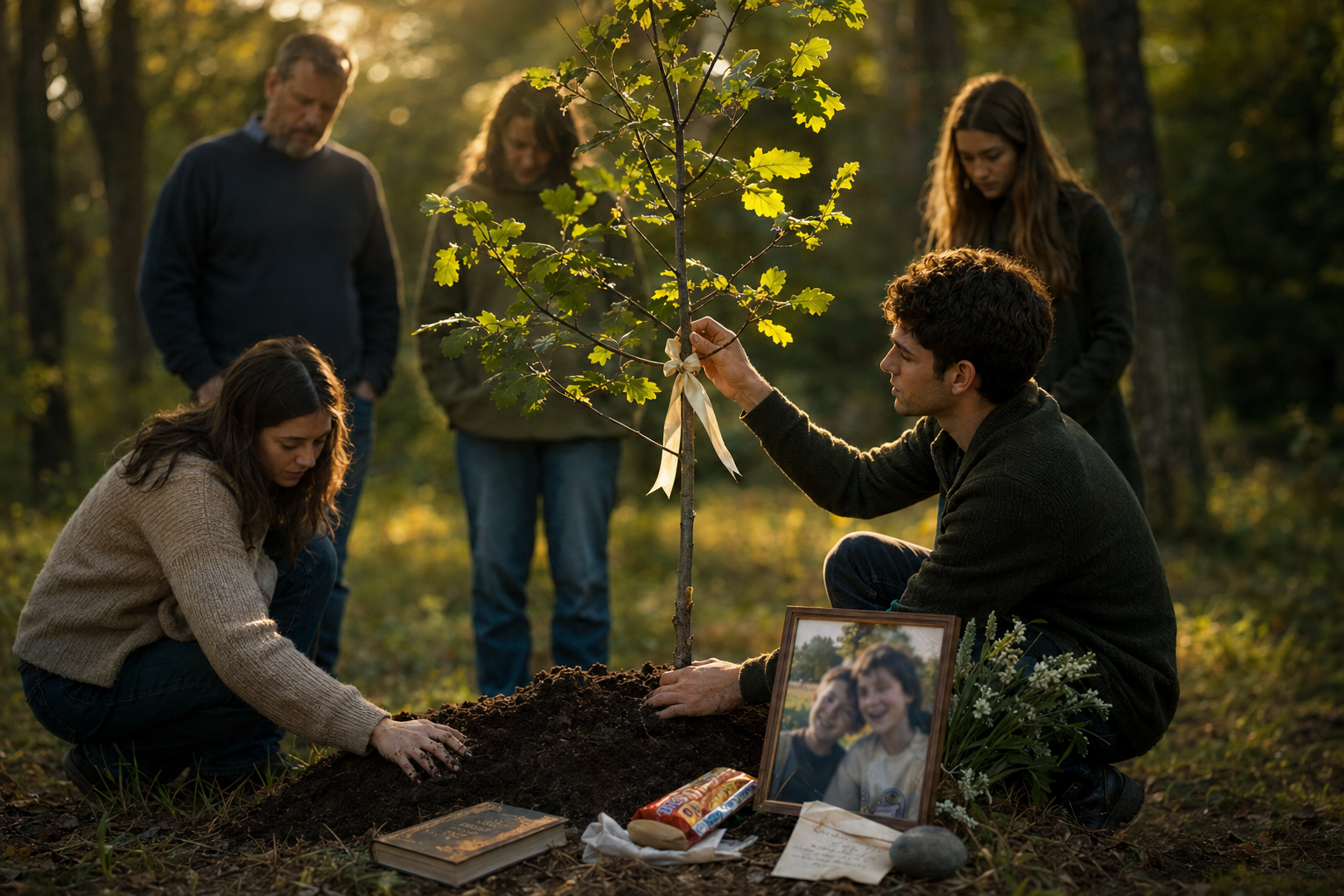
- A presence that lasts: A modest living memorial, such as planting a tree in a natural area, gives a place and a living marker for memory when the family is ready.
- Shared remembrance: A simple memory album or a digital photo collection allows people to add at their own pace; it can be shared privately and returned to when the first shock has softened.
- Help that opens space: Gifted services, such as a few hours of professional housekeeping or a meal plan subscription, remove small daily burdens so the bereaved can focus on grief when they are ready.
How to suggest a living memorial without pressure
If you think a living memorial might fit, keep the invitation open and practical. A single line in a card—"If you ever want a private place to remember, I can arrange planting a tree in their name"—lets the family respond on their own terms. If they accept, choose species that carry quiet meanings: an olive often reads as peace and longevity, while an oak reads as strength and endurance. These symbolic notes can be comforting, but the most important part is the choice to keep something alive with intention.
Timing matters: when to send what
There are phases to how people can receive support. In the first 48 to 72 hours, focus on immediate needs: food, a card, a practical offer. In the weeks after, check in again with simple, concrete actions. Months later, on anniversaries, a brief message or a small, quiet gesture can mean everything. People who have lost someone to suicide often say support fades faster than they do, so being steady and present over months is more meaningful than a single large gesture.
Non-obvious insight: a small boundary makes big room
One detail most articles miss is the power of low-expectation contact. Saying you will text once a week and then doing it—without expecting a reply—creates a predictable, safe rhythm. It gives the bereaved permission to accept help on their timetable and removes the burden of performance. Predictability is a kindness. It does not fix grief, but it lowers the friction of asking for help.
Practical sample messages you can send
Short, specific messages are easiest to receive. Use one of these as a template and adapt the name and small details.
- "I am so sorry about [Name]. I can bring dinner on Tuesday—no need to reply."
- "I will drop off groceries on Friday morning. If you need me to leave them at the door, say so."
- "If you want, I can help gather photos or messages for a private album. I can do the sorting—just tell me where to start."
Closing and a quiet option
There is no perfect thing to send after a suicide. There is, however, a kind of care that lowers the work of grief and offers choice. Practical help, named remembrance, and steadiness across weeks are the gifts people most often say they needed. If you are looking for a way to give continuity to a memory, some families choose living memorials, trees that grow as time passes. If that feels right, you can learn more about how to plant a memorial and what species might fit here.
Where to find further help
If the loss is recent and overwhelming, local crisis lines and organizations that support survivors of suicide can offer guidance and counseling resources. You do not have to find the words alone, and steady, practical care from friends and neighbors often makes the difference in the weeks and months that follow. For more on ways to honor a life with a living memorial, see SentiTree.
Send something that lasts instead of flowers
A living sympathy gift with an instant personalized certificate.
Send a Sympathy Tree →