Roots of Memory: Planting Trees in Cities to Nurture Family Bonds
Planting a tree in a city can anchor a family’s memories across generations while greening the neighborhood.
Why urban trees matter
Trees are vital infrastructure in cities: they cool streets, filter air, reduce noise, and create pockets of shelter and calm. But beyond their environmental services, trees shape the human experience of place — the routes we take, the parks where children play, the corners where neighbors meet.
Trees as memory keepers
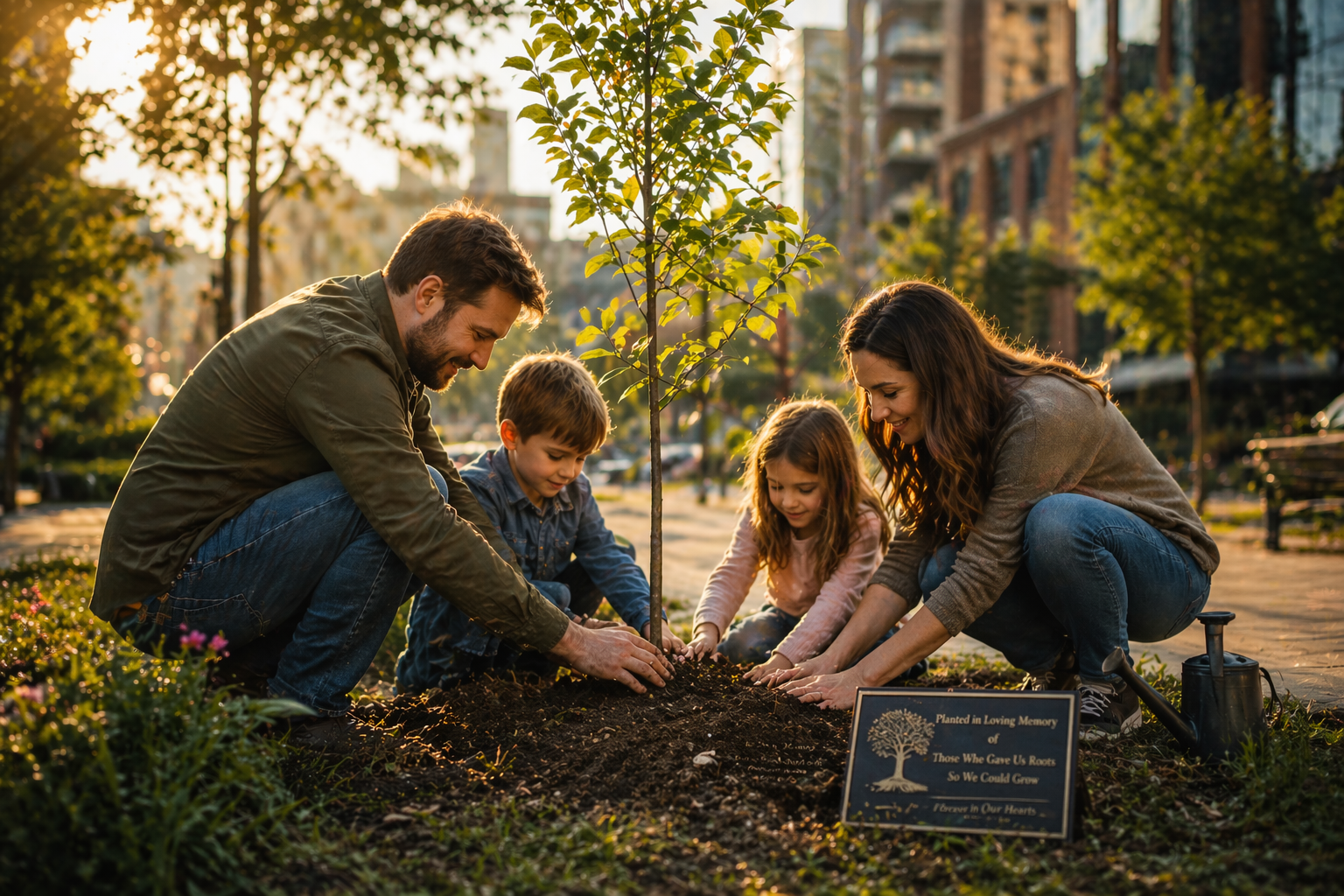
When a family plants a tree together, the act becomes a ritual. The sapling marks a date — a birth, a reunion, a promise — and grows into a living monument that carries stories. Unlike photos or objects, a tree changes with the seasons and invites repeated visits, making memories tangible and ongoing.
How to make planting meaningful
- Choose a species suited to the local climate and space available.
- Include children in the process to strengthen emotional connection and stewardship.
- Document the event with a small plaque or a family note kept with the tree’s photo over time.
Practical benefits for families and communities
Aside from emotional value, urban trees increase property value, reduce energy costs by shading homes, and encourage outdoor activity — all benefits that support healthier family life. Community planting projects can also build social ties between neighbors and provide a shared source of pride.
Final thoughts
Planting a tree in the city is an investment in both the environment and in family memory. It’s a simple act with deep meaning: roots that bind us to place, and branches that reach toward future generations.
Plant a tree in their memory
A lasting memorial that grows for generations, with a GPS certificate.
Plant a Memorial Tree →