Planting a Tree Instead of Scattering Ashes
A practical guide for choosing, planting, and honoring a tree as an alternative to scattering ashes, including etiquette, species, and legal notes.
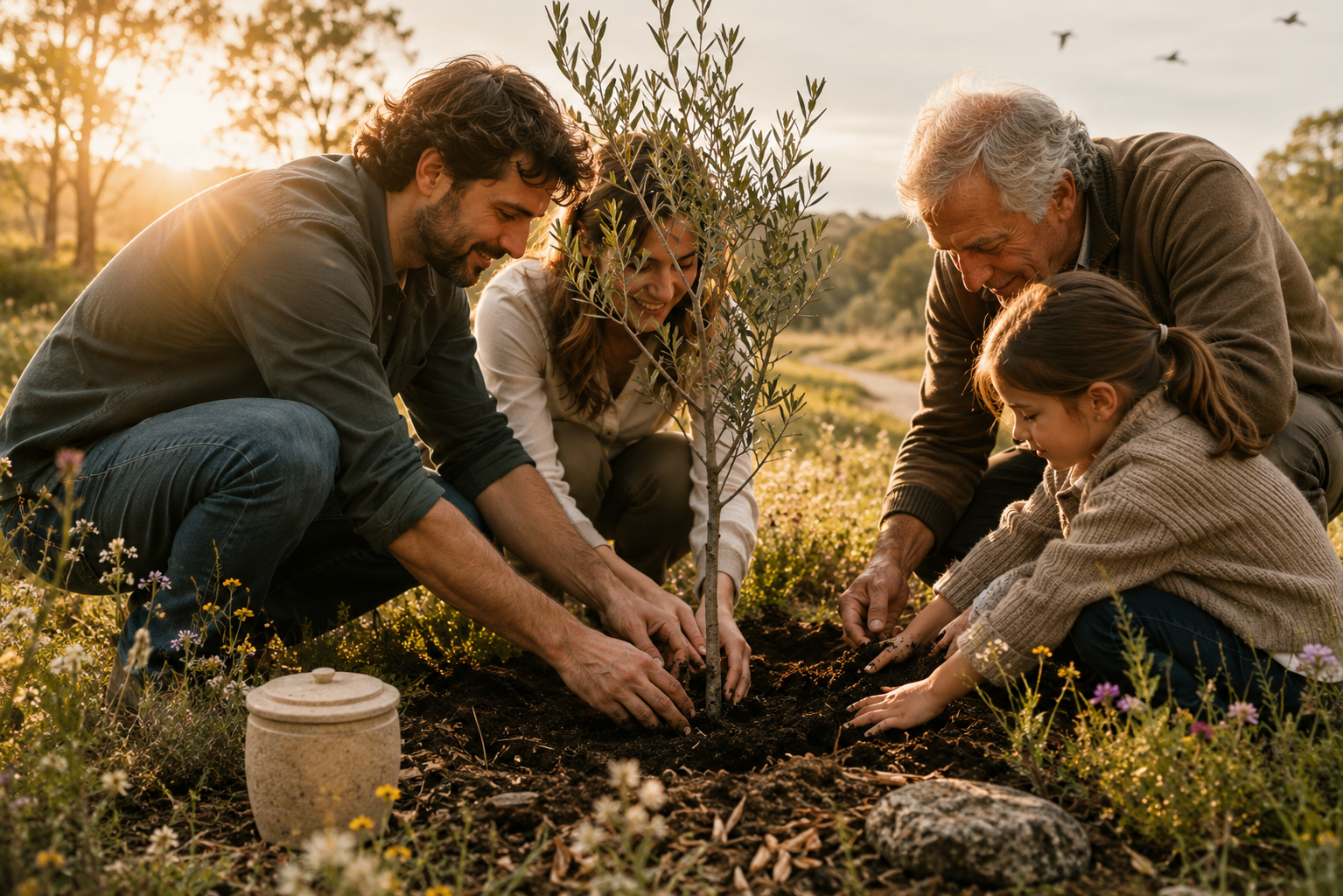
When the choice is between carrying a handful of ashes to the wind and planting a small living thing you can visit, the question is not only practical. It is also ethical, legal, and personal. This guide lays out what to consider if you are thinking of planting a memorial tree instead of scattering ashes: the permissions you may need, the species that hold meaning, simple steps that protect the sapling, and small rituals that keep memory present.
Why families consider a tree instead of scattering ashes
Scattering ashes is a common choice because it feels immediate and private. Planting a tree is different. It offers a living place that can be visited and tended, and it ties memory to a visible, growing presence. For many people, the tree becomes a repeatable address where anniversaries, stories, and small rituals can live across years and seasons.
Practical and legal questions to answer first
Before you buy a sapling or arrange a ceremony, check three practical things: land permission, local rules for spreading remains, and the health of the planting site. On private property you generally need the owner’s permission. Public parks, protected lands, and some municipal areas may require a permit. If the land is managed by a local organization, ask about long-term stewardship and whether the site will remain available in five or ten years.
How to plant ashes without harming a young tree
Cremated remains can be high in alkalinity and salts, and putting concentrated ashes directly against a fragile root ball can stress or kill a sapling. The simplest precautions are practical and low-tech: limit the amount of ash mixed into the immediate soil, dilute ashes with a generous volume of native soil or compost, or use a biodegradable urn designed for burials that disperses remains slowly. If you prefer not to place ash in the soil at all, consider planting the tree and placing a small sealed urn a short distance away, or choosing a certificate-backed planting in a reforestation project where the certificate records a GPS location.
Choosing a species that carries meaning and fits the site
Species choice matters for both symbolism and survival. An olive suggests peace and endurance, and it tolerates drought once established. An oak suggests strength and long life, though it requires deeper soil and time. In coastal or dry regions, a native drought-tolerant tree will do far better than an imported ornamental. If you want a tree that invites yearly visits and shade, choose a species that matures into a welcoming canopy rather than a fast-growing but short-lived shrub.
A short checklist for species selection
- Match the tree to the local climate and soil type.
- Prefer native species where possible to support local wildlife.
- Consider mature size and whether the site can accommodate growth.
- Think about symbolic meaning if that is important to the family.
Concrete options families can choose today
There is no single correct way to pair ashes with a tree. Below are practical approaches that families use, each suited to different concerns about land, legal restrictions, and the desire for a living address.
- Private planting at home with family stewardship: owner permission and clear care plan.
- Community grove planting on donated or stewarded land with a small plaque or GPS certificate.
- Certificate-based planting in a reforestation project, paired with a small plant or keepsake sent to the family.
- Biodegradable urn burial beside a planted tree, keeping the sapling and remains close but controlled.
Three reasons some people prefer a tree to scattering ashes
- A presence that grows: A tree changes with every season and gives family members a predictable place to return to, which can make anniversaries feel less raw and more connected.
- Respect for site and rules: Planting can be done with permission and planning, which reduces the legal and environmental uncertainty that sometimes accompanies scattering in public places.
- An act that gives back: When chosen thoughtfully, a tree supports local ecology and counters the transient nature of traditional floral tributes by offering lasting environmental benefit.
Etiquette and small rituals that feel appropriate
Keep ceremonies modest and mindful of the family’s wishes. Ask whether the family wants a private planting or a small public gathering. If the site is near others, avoid loud or prolonged ritual elements. Bring biodegradable items, and leave the place tidy. Small rituals that matter are often repeatable: a short reading year after year, a pressed flower tucked into the soil, or a recorded story attached to a digital memorial.
When you cannot plant where you want
If permits, distance, or land management prevent planting on your preferred site, a certificate for a tree planted in a stewarded restoration program offers a similar emotional anchor. That certificate can include coordinates and photos, and families sometimes pair it with a sapling at home or a small keepsake. This hybrid respects land regulations while keeping memory tangible.
Resources and where to look next
Speak with the landowner and local municipality about rules for remains. Ask a nursery about species suited to your soil. If you prefer a professionally stewarded option, consider organizations that plant and track trees and provide a certificate you can visit online. For a planted sapling paired with a record and certificate, see plant a memorial tree as an example of how a family can keep a living presence and a clear record of location.
Closing: a careful, living choice
Choosing a tree instead of scattering ashes is both a practical decision and an emotional one. It asks you to think about land, care, and the form memory should take. If a family wants continuity, a tree can be a quiet, living answer. For families exploring options for a living memorial and a recorded location, consider visiting Sentitree’s information pages to see examples of how a small, stewarded planting can hold memory across seasons.
Plant a tree in their memory
A lasting memorial that grows for generations, with a GPS certificate.
Plant a Memorial Tree →