Honoring a Veteran on Memorial Day with a Living Tree
Practical, respectful guidance for dedicating a living memorial on Memorial Day, including site etiquette, species choice, and ways to involve community and family.
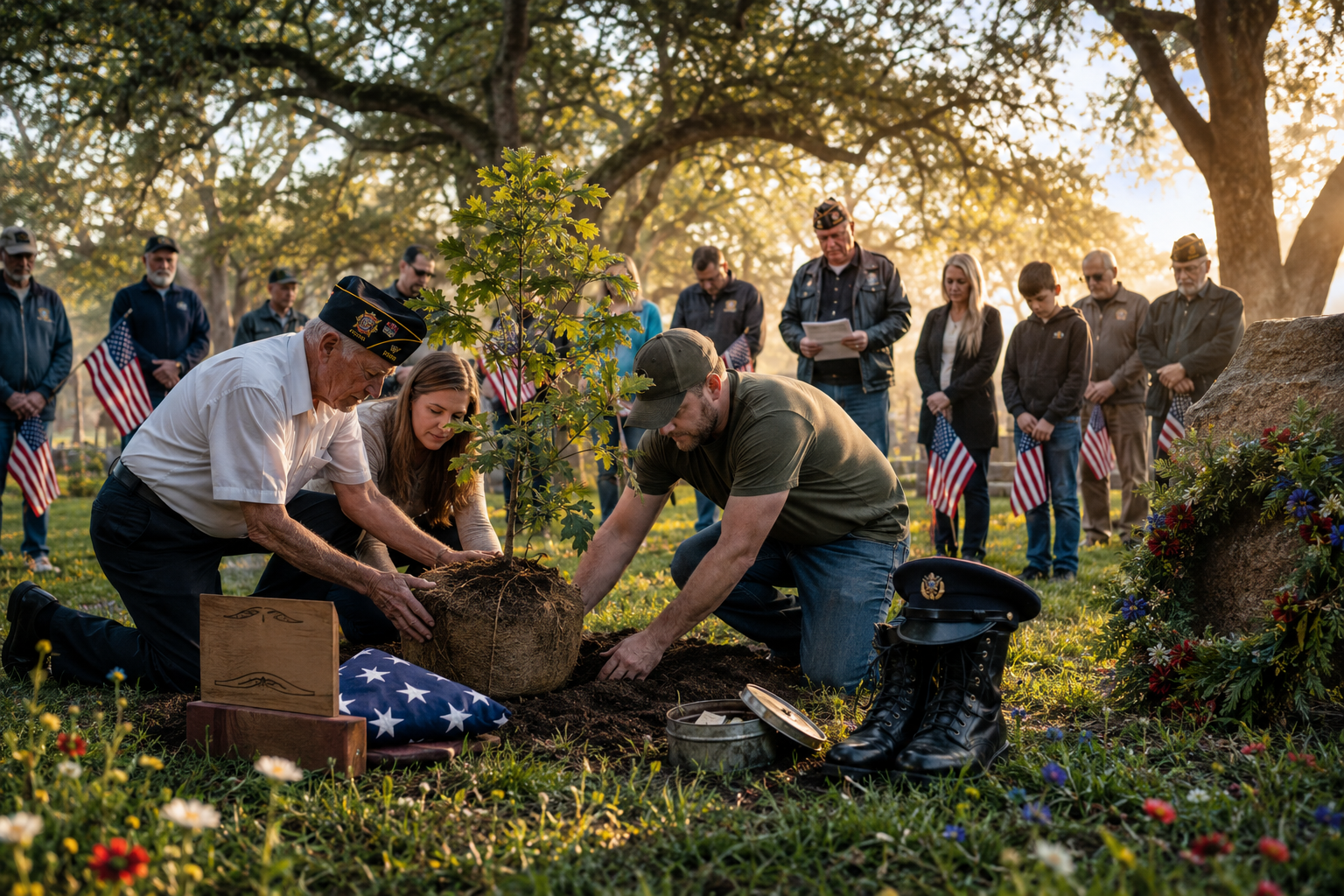
I stood with a neighbor once, holding a small sapling wrapped in burlap. He had served in the same regiment as his father. He did not want a plaque that would be forgotten under a bench, and flowers felt like a brief, bright apology that would wilt. He wanted something that could hold a date and a face without saying more than a name. We planted the tree on a quiet morning before Memorial Day, said a few simple words, and left the spot knowing it would keep changing with the seasons.
Why a tree on Memorial Day can mean more than a ceremony
Memorial Day already asks us to remember publicly. Adding a living memorial shifts that public moment into a longer conversation across years. A tree can mark the date but also invite care. It is a way to gather people who cannot attend a formal parade but can visit a sapling on an ordinary afternoon. It changes a single memorial day into a place families can return to in the future.
Practical etiquette: where and how to plant, and who to ask
Before you dig, ask. Many cemeteries, parks, and veteran memorial sites have rules about plantings, markers, and ceremonies. If you plan to plant on public land or at a national site, contact the stewarding agency. If you are helping a grieving family, take the lead on permissions so the first moments are not interrupted by paperwork.
- Confirm site rules with the cemetery, park, or city before making any plans.
- Choose private land only if the owner has given written permission and understands the long-term care responsibilities.
- If planting within a designated memorial grove or reforestation program, check whether you may request a species or must accept the steward’s choice.
- Coordinate timing: early spring or autumn plantings usually give a sapling the best chance to establish, even if the dedication happens on Memorial Day.
Choosing a species that honors service and survives the site
People often look for symbolism. An oak suggests endurance, and an olive suggests peace and long life. Those associations matter, but practical fit matters more. The right tree is native to the region, appropriate for soil and sunlight, and does not grow into power lines or foundations. If you cannot select a species because the planting is part of a larger restoration program, focus instead on the meaning of care: how the tree will be tended and who will remember it.
Details that make the species choice last
Ask whether the planting program uses local seed stock and whether the sapling’s mature size fits the site. If the family lives nearby, pick a species that can be visited easily and will not require specialized care. If the planting is in a managed restoration area, request a certificate or GPS coordinates so the family can follow the tree’s growth online when available.
How to involve a unit, comrades, or community
Veteran loss often reaches beyond family to a wider circle of comrades. Invitations that reflect the tone of service are usually appreciated. Keep gatherings short and structured, and make clear whether the event is formal or informal. Small gestures work: ask a former comrade to read a short paragraph, invite a bugler for taps if appropriate and permitted, or ask attendees to leave a handwritten note sealed in a small weatherproof tin placed beside the sapling.
Specific options for Memorial Day dedications
Below are tangible formats that families and supporters use when they want to mark Memorial Day with a living memorial.
- Small family dedication at a local park followed by a private moment at the tree, with an optional certificate to the family.
- A unit-sponsored dedication, coordinated with local veterans groups and followed by a brief wreath or flag placement.
- A certificate-backed reforestation planting where the species is chosen by the stewarding partner, with GPS coordinates provided.
- A garden memorial at home with a native tree and a simple marker that notes rank, name, and a short line of remembrance.
Three reasons families choose a living memorial
- A presence that returns: The tree gives a place to visit across years, not just on a single day.
- A ritual that includes others: Planting allows comrades, neighbors, and family to participate in a shared, quiet act of remembrance.
- A memory that contributes: When planted with ecological care, the memorial benefits the surrounding land as it honors a life.
Care and stewardship: the questions to answer first
Before you commit to a planting, answer who will water young trees, how long the steward will keep record of the location, and whether the family will have regular access. Clear stewardship prevents a well-meaning memorial from becoming neglected. If the family cannot guarantee hands-on care, a partner organization or local veterans group may assume stewardship in return for a dedication note.
Small rituals that make a Memorial Day dedication feel right
Rituals need not be formal. The simplest acts tend to last: a short reading, a folded flag hung for a day, a single bell or a recorded bugle played at the tree, or a promise to leave a small, natural token each year. These gestures are repeatable and invite future visits rather than performative pressure.
What to do when distance or restrictions make planting impossible
If the family is far away or the site is restricted, alternatives still hold meaning. Consider a certificate for a tree planted in a stewarded restoration project, coupled with a small potted native shrub sent to the family’s home. Another option is a digital dedication with images and a short written memory that the family can share privately. These choices respect limits while offering continuity. For a practical planted option, see plant a memorial tree and read how a planted sapling can be paired with a certificate and location details.
Closing: a careful step forward
Memorial Day is a public anchor. Planting a living memorial on or around that date can move memory from a single day to a place that changes with seasons and holds stories. Begin with permissions, choose a species that fits the site, and name a steward. If that feels right, the act of planting becomes more than ceremony; it is a way to carry service into the future. For families wanting to explore options or to see examples of planting locations, visit Sentitree for information on living memorial partnerships and tracking options.
Plant a tree in their memory
A lasting memorial that grows for generations, with a GPS certificate.
Plant a Memorial Tree →