Planting a Memorial Tree in Dry Climates
Practical guidance for choosing species, timing, and care when a memorial tree must live in dry, arid places. Learn what to expect and how to make a living tribute endure.
The box of stamped condolence cards sits at the kitchen table. Someone suggested planting a tree, but the family’s home sits on a dry, wind-swept slope. The immediate thought is that trees belong in green parks, not in dust. That worry is the place to start. A living memorial can take root in dry places, but it asks for different choices and different small acts of care.
Why dryland memorials are different
Planting in an arid or coastal desert environment changes nearly every decision, from species to ceremony. In wet climates a tree’s survival depends mostly on avoiding shade or poor drainage. In dry landscapes the priority is matching the tree to the micro-site, and planning for an establishment period where water and protection matter most. Olive trees, for example, are well adapted to hot, dry sun and calcareous soils, and many dry-forest species in coastal Peru, like Prosopis pallida, evolved to live with very little water. Choosing a tree that naturally belongs there is more important than choosing one that looks symbolic on paper.
Choosing species that carry meaning and survive
Symbol matters. An olive often stands for peace and endurance in Mediterranean settings. In Ica, Peru, the huarango or algarrobo (Prosopis pallida) holds strong ecological and cultural meaning as a dryland survivor and a piece of local heritage. If the goal is a living memorial that will require little intervention after establishment, prioritize native or regionally adapted species.
Three practical species choices, by region
These are starting points rather than prescriptions. Local soil, groundwater, and legal rules matter.
- Mediterranean and similar climates: Olive tree, drought-tolerant oaks, Italian cypress.
- Coastal desert (Ica, Peru): Huarango (Prosopis pallida) and companion native shrubs, planted as a small dry-forest patch.
- Hot, arid inland sites: Mesquite, palo verde, or desert willow depending on soil and local regulations.
Practical steps to give a memorial tree the best chance
There are four moments that most determine a tree’s future. Each one asks for clear, modest actions that anyone can do.
- Initial choice: Match species to the micro-site. If the tree will sit in a riverbed, it can tolerate brief floods. If it will sit on a dune, pick a species adapted to sandy, fast-draining soil.
- Planting moment: Prepare the hole and add organic matter if the soil is poor. In many dry sites, improving the immediate root zone at planting compensates for the months ahead.
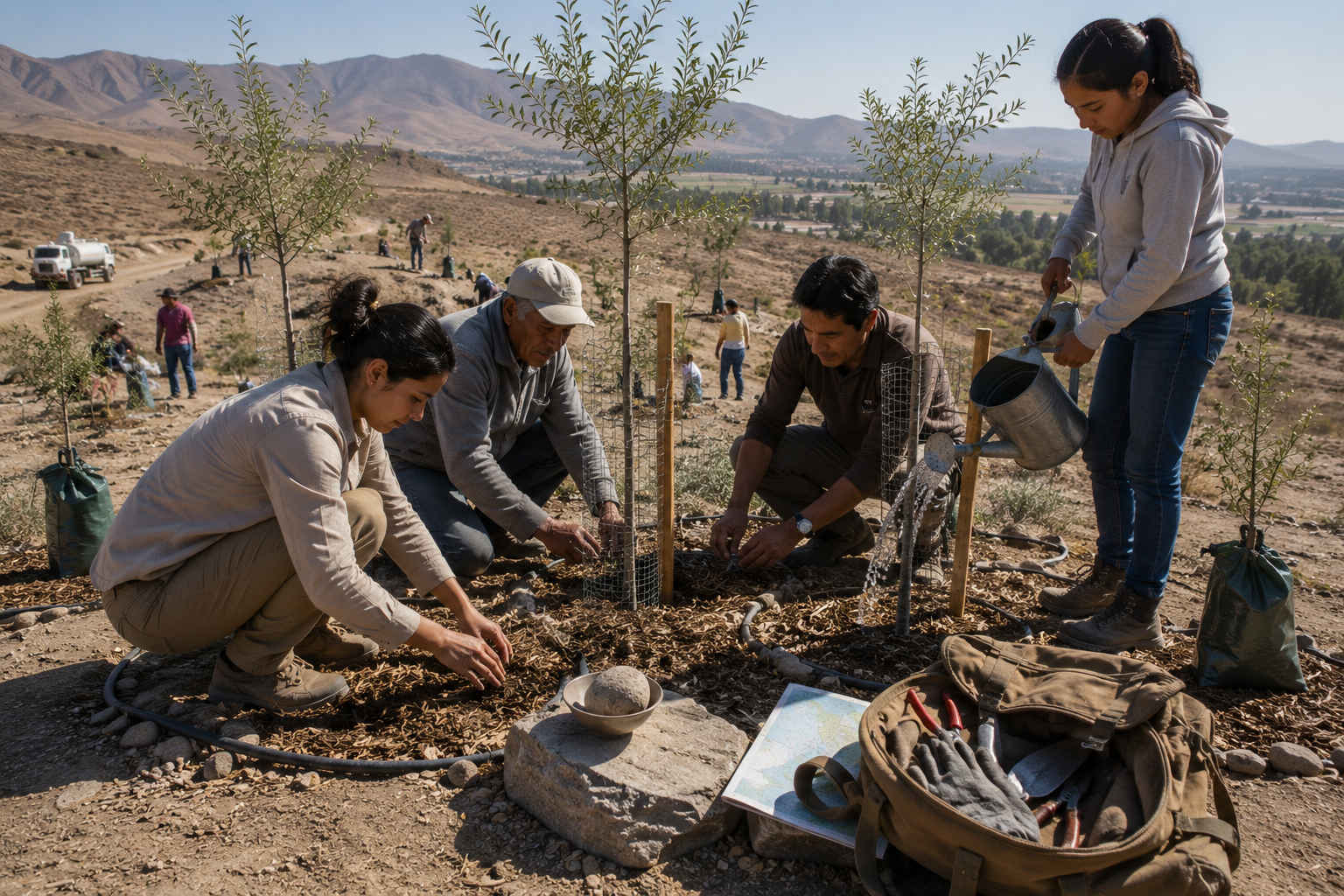
- Establishment care: Provide consistent watering and shelter for the first two to three years while roots expand, then step back. That early investment is when most trees either make it or fail.
What family and friends can actually do
When you are choosing or gifting a memorial tree to someone who lived in or loved a dry place, the list of meaningful options is concrete and limited in a helpful way. Here are specific things that carry impact.
- Pay for the establishment period: a few seasons of targeted watering and a simple protective stake or mesh can be arranged by the planter.
- Choose a site plan that uses native companion plants to reduce wind and conserve moisture.
- Create a small ritual at planting that ties the person to a place rather than to a species. Names, a single favorite scent, or a written note buried nearby can be part of the ceremony.
- If the site is remote or protected, consider dedicating a nearby accessible place where people can visit without harming fragile habitats.
One less obvious but useful idea
People often think of memorial trees as single specimens. In dry landscapes a small cluster beats a lone tree. Planting two or three compatible individuals within a protected area creates microclimates, reduces wind stress, and increases the chance that at least one will thrive. It also creates a quieter, living place rather than a single symbolic object, which many families find easier to visit and to tend.
Local rules, etiquette, and partners
Many dryland projects are part of larger reforestation or restoration efforts led by local partners. In Ica and other coastal regions, successful restoration uses Prosopis and companion natives and works with nearby communities. If the planting will occur on public lands or in a protected area, check regulations and consult local restoration groups. Working with a partner ensures the memorial contributes to ecological recovery rather than becoming an unsanctioned planting.
Three short reasons a dryland memorial can hold meaning
- A presence that endures: A well-chosen dryland tree can live for decades with minimal water, creating a lasting geographic anchor for memory.
- Ecological repair: By choosing native species and partnering with local projects, a memorial can support habitat restoration rather than just add a single tree to a space.
- Tactile ritual: Tending a newly planted tree with small acts of care offers a way to feel present after a loss, and the dryland setting gives those acts extra weight because they require attention and intention.
Timing and the first year
Planting in a dry climate often pairs best with seasons that offer cooler temperatures and a chance of rain. In many places that is late autumn or early spring. The immediate window after planting is critical. Water thoughtfully and less frequently rather than shallow daily watering. Mulch the root zone to conserve moisture and reduce surface evaporation. For families who cannot be on site, arranging a short maintenance contract with a local steward or community group for the first two to three years is a practical way to protect the gift.
Options if you cannot plant locally
If distance, legal limits, or fragility of the site make direct planting impossible, there are meaningful alternatives that still honor place and memory. You can support a local reforestation project that uses native species in a nearby dry-forest restoration, or dedicate a small grove on public land through an organization that manages plantings. These choices let the person’s memory be part of a larger repair effort.
Closing: a living place that remembers
Choosing a memorial tree for a dry place asks for different questions than choosing one for a garden. It asks who will care for the tree in the early years, what species truly belongs on the land, and whether a single tree or a small cluster will better hold a presence. These are practical decisions, and they are also acts of care. If you would like to explore options for a living tribute or to plant a memorial tree in a place that needs it, there are ways to do so that respect both memory and landscape.
Want help planning a dryland memorial?
If you are considering a memorial tree in a dry or arid setting, a local planting plan and a short establishment budget make the difference between a symbolic gesture and a living place to visit. Learn more at Sentitree or consult a regional restoration group to match species to site.
Plant a tree in their memory
A lasting memorial that grows for generations, with a GPS certificate.
Plant a Memorial Tree →