How to Honor a Pet That Passed Away
When a pet dies, finding a way to honor them can feel both urgent and tender. This guide explains meaningful ways to honor a pet that passed away, including living memorials.
Pets hold a place in a household the way few others do: they are routine, small gestures, a presence at the foot of the bed. When that presence ends, the quiet that follows can feel both sudden and oddly persistent. This article explores ways to honor a pet that passed away—ones that acknowledge grief without asking anyone to pretend it did not exist.
Listen to what the loss asks for
Grief after a pet’s death is not a script. For some people it is private and slow; for others it arrives in brief, sharp moments. The simplest step is to notice how the family remembers: is there a photo that still gets touched? A favorite walk now missing from the calendar? Those small clues suggest gestures that will feel honest rather than performative.
Practical ways to mark the moment
Routine helps. People often find comfort in small acts that create a new ritual around the absence rather than trying to erase it.
- Create a memory box — A box with a collar, a toy, and a few photos holds more than objects; it holds the shape of the life that was lived.
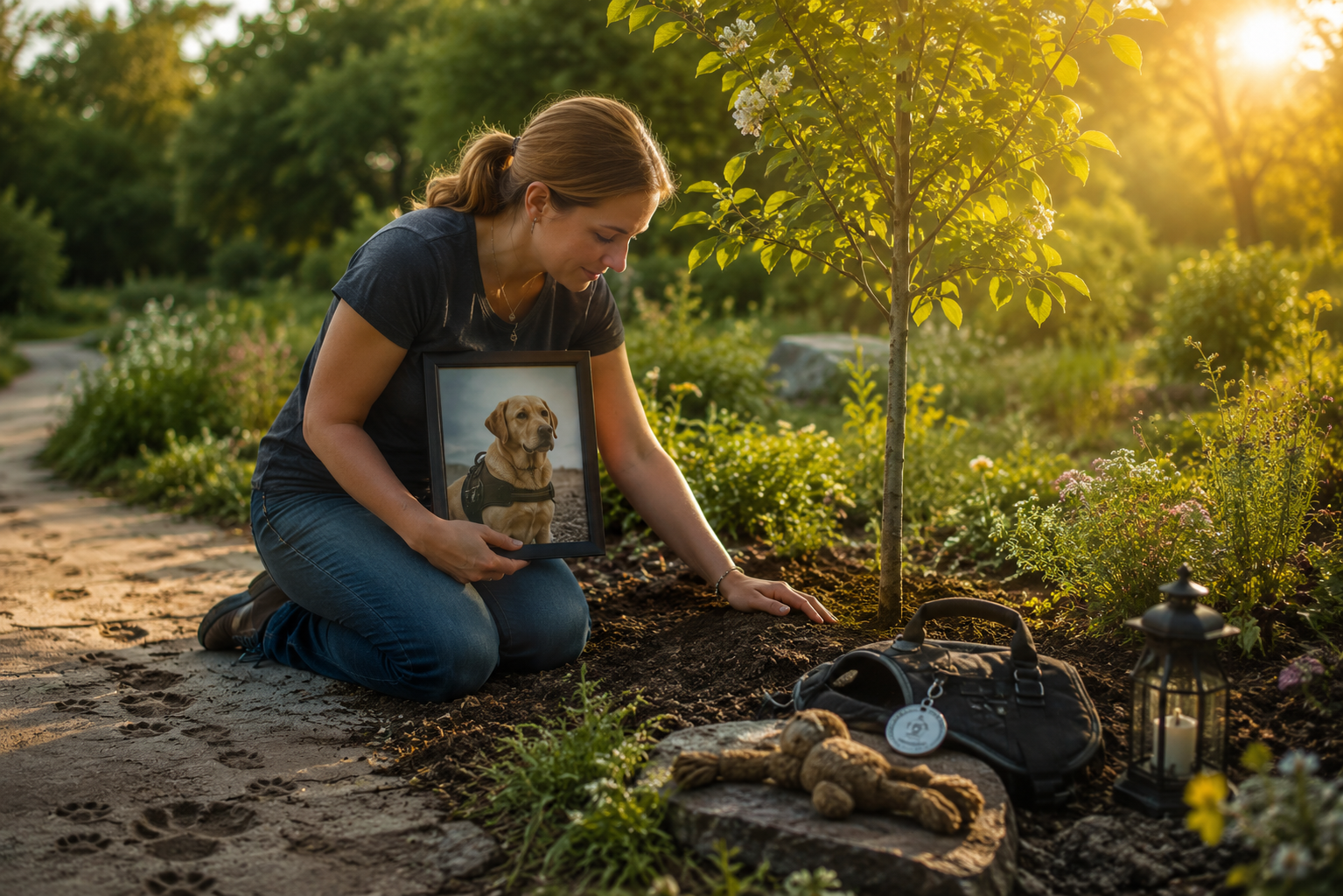
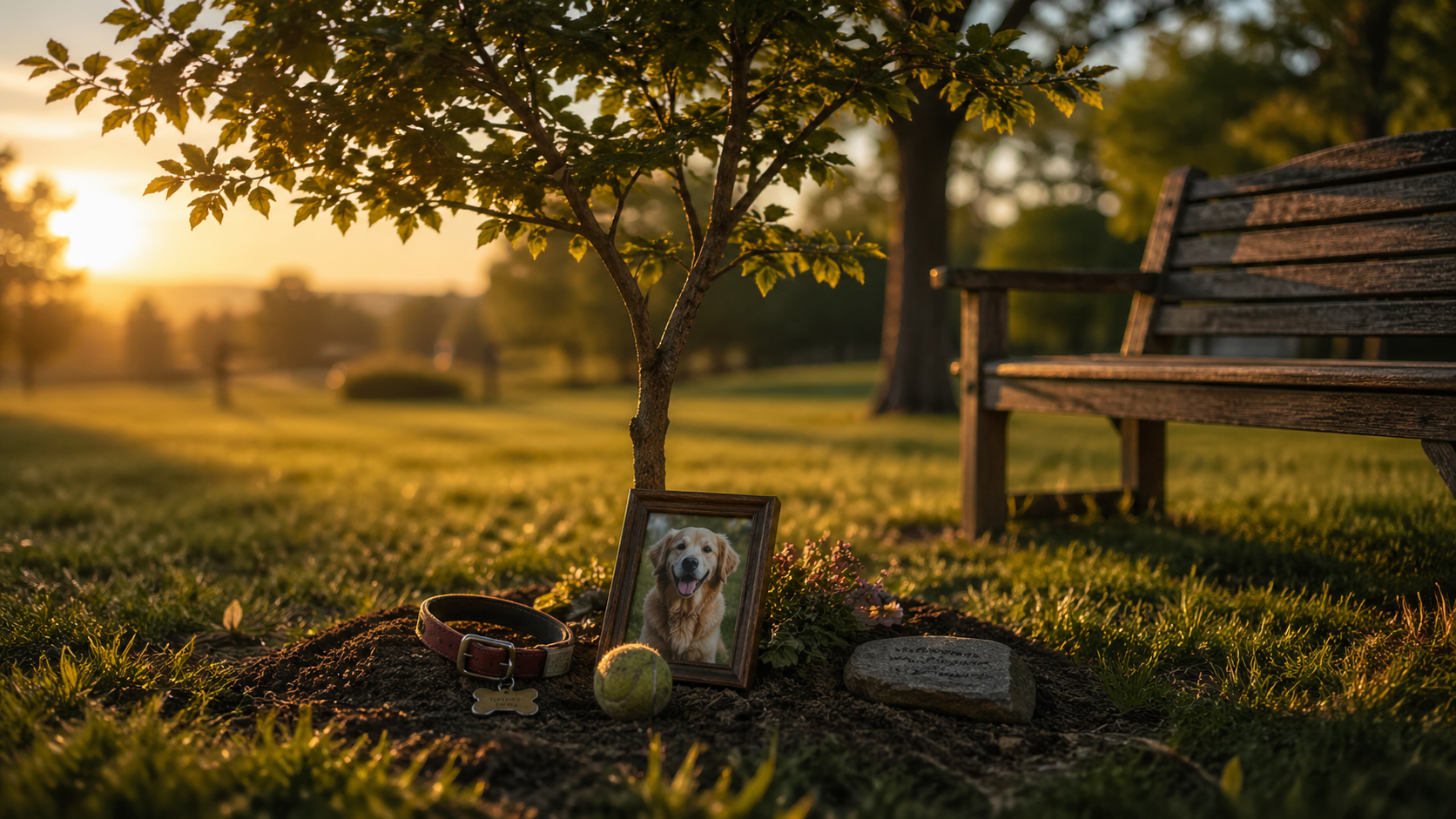
- Plant something living — A small tree or shrub in the garden can hold the memory of a pet in a way that grows and changes. Families have described this as a place to sit and say a name out loud.
- Make a photo or video montage — Even a brief collection of moments set to quiet music invites remembering without pressure.
- Hold a short, private ritual — Lighting a candle, sharing a memory, or simply sitting in a favorite spot can be enough.
- Donate in the pet’s name — A donation to a local shelter or wildlife organization turns grief into something outward-facing.
Why a living memorial can help
Plants punctuate time. They change with seasons, which allows memory to be revisited in small, tangible ways. A living memorial—whether a potted plant or a tree—does not ask anyone to move on; it offers a place to return. For those who want a gift that lasts beyond a bouquet, living memorials allow a private grief to take a public, gentle form.
Three reasons families choose living memorials
- Continuity — A tree grows as the memory remains. It becomes a marker for anniversaries and quiet afternoons.
- Physical anchor — A place on the land to visit can soften the ache of absence by offering a focused action: plant, visit, watch.
- Environmental meaning — Planting helps the world that held the pet, creating a small, shared good.
Practical considerations
Not every household can plant immediately. A potted memorial, a tree planted in a community space, or even a seed packet can be chosen with the family’s circumstances in mind. If the family is scattered, a symbolic tree planted by a trusted organization can be paired with a physical token—an engraved stone or a small printed certificate—that travels with the people who need it.
Stories that matter
Many people find themselves telling one particular story again—how the pet learned to sit by the window, the time it refused to leave someone’s side, the absurd habit that became family lore. Naming one small story in a card or at a gathering turns private sorrow into a shared human moment. Those stories are the clearest tribute.
Organizations that specialize in living memorials can help with logistics and permanence. For example, families sometimes use services like Sentitree to plant a tree in a dedicated location and receive a certificate. Others choose to plant in a local garden and keep a small plaque at home. Both approaches are valid; the choice depends on what feels proportionate to the grief.
When to ask for help
If grief becomes a constant weight—interrupting sleep, appetite, or daily tasks—reaching out to a friend, a support group, or a mental health professional is a sensible step. Pet loss groups and local animal shelters often run peer-support sessions where people can speak without explanation.
Honoring a pet that passed away does not require grand gestures. It requires honesty about what is lost and small actions that hold space for remembering. A planted tree, a memory box, a donation, or a quiet story read aloud can all serve the same purpose: to let the pet’s place in the family remain visible.
For those who prefer a living, lasting option that is handled with care, services such as Sentitree provide a way to plant a tree in a dedicated site and receive a lasting certificate. These options can be arranged quickly and provide a continuing place to return to.
Read time: 6 min
Honor a beloved pet with a living tree
Plant a real tree in their memory and receive a personalized certificate.
Plant a Pet Memorial Tree →