How to Honor a Service Dog After Loss: Gentle Memorial Ideas
When a service dog dies, grief mixes with a loss of daily support. Here are thoughtful, practical ways to honor their work and keep their presence alive.
The sound of the harness on the kitchen tile. The small, exact routine that once shaped a day. After a service dog dies, the grief is both for a companion and for a practical presence that kept routine steady. You might be reordering small parts of every hour. That is normal, and it does not need to be solved by words. It can be held, slowly, with acts that honor what the dog did and who they were.
Remembering a Working Life
Service dogs carry a kind of labor that most memorials do not name. They guided a body, steadied a breath, opened a door, alerted to a need. When you choose how to remember, start by naming the work. A memorial that acknowledges role and skill can feel truer than a generic tribute. It is not only about affection; it is about respect for what the dog taught you, and for the independence they gave you.
Practical, Gentle Memorial Ideas
Below are ways people have found meaningful. Each idea can be adapted to budgets, faith traditions, and living situations. There is no single right choice. Pick what feels like a fitting echo.
- Hold a small remembrance with people who knew the dog’s work and routines. Keep it short. Share a story about a day the dog made a difference.
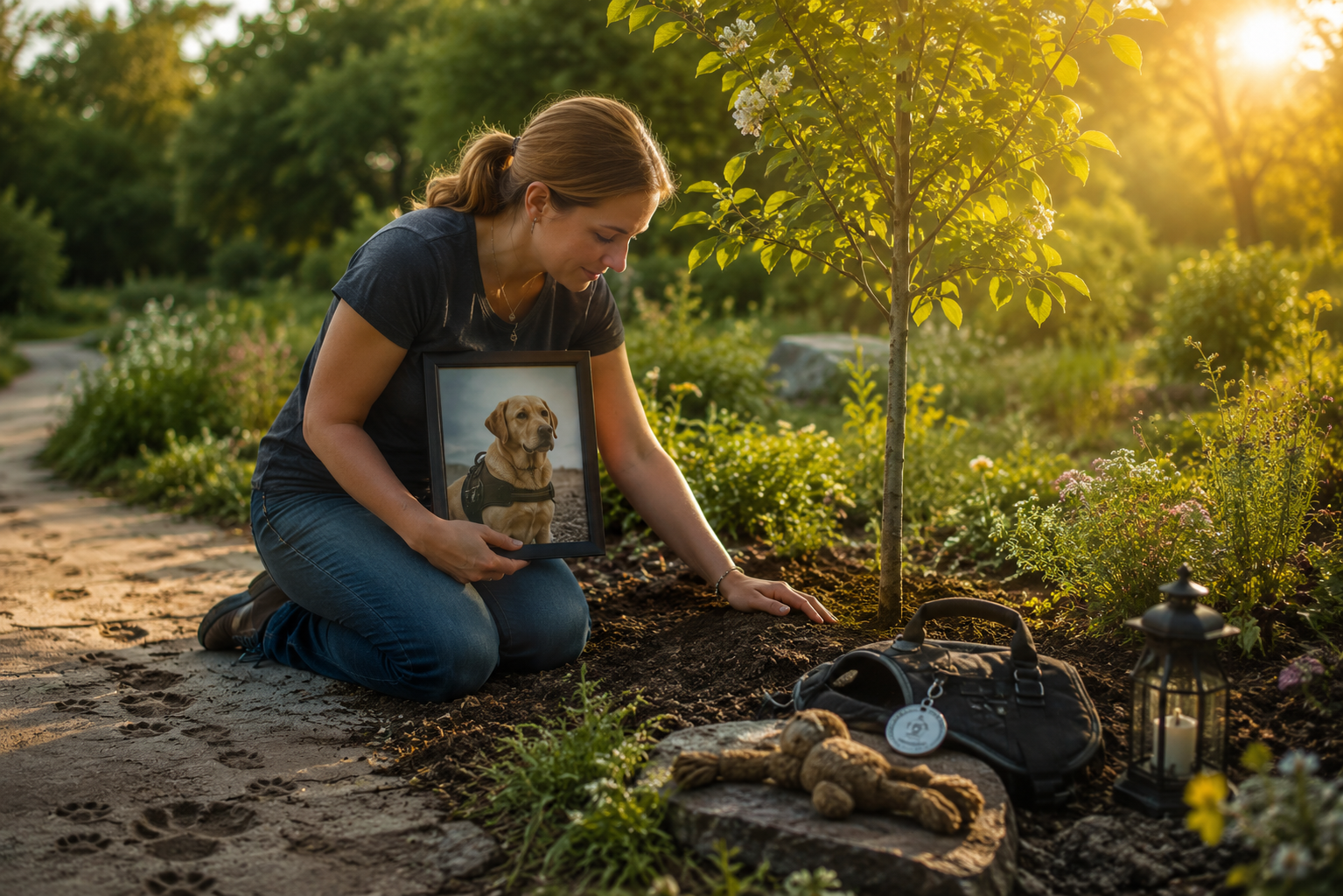
- Create a framed photo that includes the dog’s working vest, harness, or ID patch. The vest tells the story at a glance.
- Plant a tree or a lasting shrub in a place you can visit. A living memorial grows and changes through seasons.
- Make a memory box with the dog’s tags, a favorite toy, and notes that mark the specific tasks the dog performed.
- Commission a small plaque or cast of the paw to place under a tree, in a garden, or inside the home on a shelf.
- Donate to a service dog organization in the dog’s name, or sponsor training for another working dog.
A Non-Obvious Way to Carry Presence Forward
One practical option people often overlook is turning routine supports into memorial routines. For example, if the service dog walked a specific route every morning, set a small recurring practice at that time. It can be brief: lighting a candle, sitting with a photo, or making a small donation. The act is not meant to fix grief. It is meant to place the dog’s service back into the weekly rhythm, so memory does not live only in moments of sharp loss.
How to Choose Which Memorial Fits
Not every idea fits every life. When choosing, consider three things: the dog’s role, your living situation, and how public you want the memorial to be. If you live in an apartment, an indoor memory shelf and a donation may be more practical than a planted tree. If the dog worked closely with a small community, a short gathering might provide the kind of collective witness that helps.
Questions That Help Decide
Ask yourself: Which memory comforts me when a routine breaks? Which object triggers the clearest story about what the dog did? Which option will you visit in three months or one year? Those answers will guide a choice that stays useful rather than decorative.
Ways to Include Practical Necessities
When a service dog dies, practical steps often arrive alongside grief. The dog’s handler vest, paperwork, or training records may need decisions. If returning gear to an organization is required, ask if they accept keepsakes back or if they can remove identifying information and return a cleaned memento. If the vest must be kept, consider having part of it framed with a photograph so the piece of working history is preserved in a respectful way.
Three Reasons Families Choose Living Memorials
- A presence that lasts: A tree or shrub keeps changing with the seasons. It marks anniversaries and becomes a place to sit, remember, and bring children or friends.
- Connection to role: Planting near a route the dog walked or where they trained can tie the memorial to the work they did, not only to their companionship.
- A gift for others: Donating in the dog’s name or sponsoring training creates a living ripple. It turns private grief into public support for other people who will rely on working animals.
Ideas Tailored to Specific Situations
If you were the dog’s primary handler and rely on service animals for daily life, you might need both a memorial and a plan for the future. Consider whether you want to begin the process of finding a new working dog, when you feel ready, so that practical independence can return on a timetable that makes sense to you. If the dog supported a child or an elder, involve them in choosing the memorial so their memory has a place that feels safe and real.
Preserving Memory Without Exposing Grief
Sometimes a public memorial feels too large. A quiet interior tribute can be just as real. A small framed vest, a photo shelf, or a journal of short notes about days the dog helped can be private, immediate, and visitable when you need it most. If you choose a public act, like planting a tree, make sure the location is accessible and meaningful to you. For families who want both, a small indoor shrine plus a tree in a community garden can work together.
Keeping Practical Records
Before you set anything in stone, gather the dog’s records and photographs. Label a single folder with dates, training certificates, and a short narrative of the dog’s role. That folder becomes a future resource for the person who follows you. It is a quiet way to pass the dog’s story forward to a trainer, a family member, or a memorial organizer.
When a Living Memorial Feels Right
Some people choose to plant a tree because a tree returns a visible marker across seasons and years. Others prefer a donation or a plaque. If a living memorial appeals, you can plant a memorial tree in a way that keeps the dog’s name and role visible. The choice is less about permanence and more about how you will meet the memory in ordinary days.
Closing Thought and a Way Forward
Grief from the loss of a service dog holds a practical ache as well as a private grief. You do not have to erase either. Practical memorials that name the dog’s work, that preserve the vest or tag, or that offer a living place to return can help the memory become part of life again. If a living memorial feels like the right step, consider a tree or a lasting tribute that you can visit, year after year. Visit Sentitree to learn more about living memorial options and how they can be shaped to honor a working companion.
Honor a beloved pet with a living tree
Plant a real tree in their memory and receive a personalized certificate.
Plant a Pet Memorial Tree →