Planting a Tree to Mark Cancer Remission
Planting a tree to mark cancer remission creates a quiet, living mark of survival, resilience, and continued life. Practical ideas, species meanings, and simple rituals.
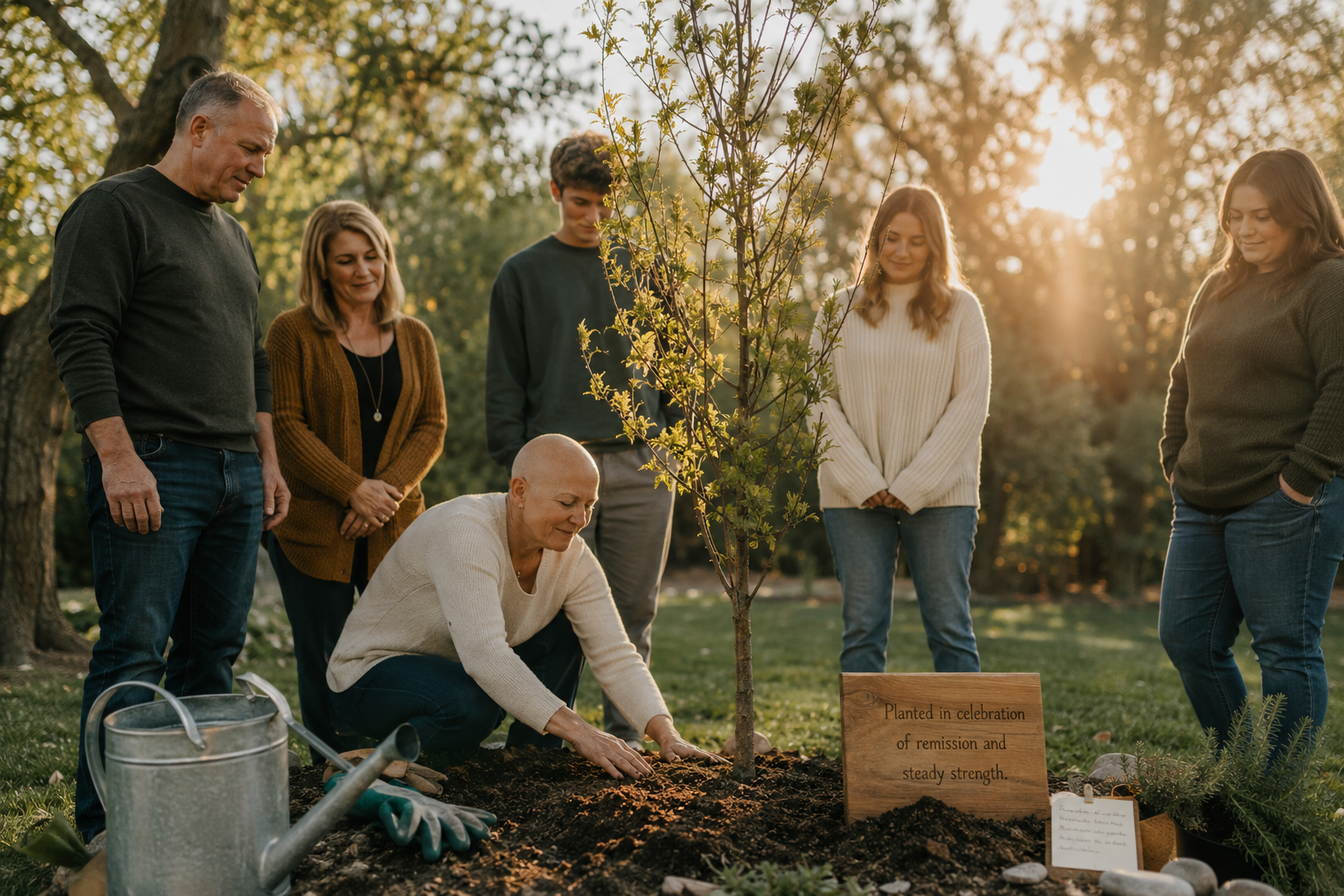
The day treatment ends can feel full of relief and strange silence. I remember standing in a small yard after my sister’s last infusion and wanting something that would hold that day beyond an appointment calendar. Planting a tree offered a way to let a moment of survival keep growing. A tree marks change without trying to name it.
Why a living tribute feels different
A living tree is not a replacement for a party or a medical milestone. It is a durable, quiet witness. Trees carry a language we already know: roots for the past, new shoots for what comes next, and a slow, visible growth that reminds us life continues. Many cultures and organizations use trees to mark healing and recovery because they symbolize renewal, resilience, and a future still unfolding.
For someone leaving treatment, a tree can be a physical marker that the body endured and the future remains. An olive tree often stands for peace and steady resilience, while an oak suggests strength and endurance. Those associations are not rules, but they help families choose a tree that carries the right tone.
Choosing the right tree and place
Think less about species trivia and more about the setting. Will this be a backyard tree someone visits often? A sapling in a community grove? A tree planted where friends can gather on anniversaries? Each option changes the meaning slightly. A few practical questions to ask:
- Does the chosen location allow long-term care and watering?
- Is the soil and climate suitable for the species you like?
- Do you want the planting to be private or something celebrated with others?
- Will this tree need permissions or permits if planted in a public space?
- Do you prefer a fast-growing tree for quicker presence, or a slow-grower for a rooted, steady symbol?
How to mark remission: simple rituals that hold meaning
There is no correct ceremony. Small gestures that connect the person who finished treatment to the tree often matter more than elaborate plans. Below are practical rituals people have found meaningful.
A short script for a small planting
Stand in a circle. One person says a few words about what the day means. The person who finished treatment places the first handful of soil. Close with silence or a chosen line, for example: “May this tree remind us of the strength that carried you here.” Keep the words short, specific, and true.
- A presence that lasts: A planted tree is not fleeting. It grows in seasons and records anniversaries, giving family and friends a place to return. Rather than a single celebration, a tree invites repeated small acts of remembrance and gratitude.
- A symbol of recovery: Unlike purely celebratory gifts, a tree acknowledges that healing is ongoing. It honors the difficulty without reducing the day to an upbeat slogan. The tree’s cycles reflect the reality of recovery, with good days and hard ones.
- A public and private gift: A tree can be visited in private, or it can be a quiet public marker when planted in a shared grove. That flexibility lets families choose how visible they want the milestone to be.
Practical ideas and options
Below are concrete options to adapt to different circumstances. Choose one that fits the person’s style and the family’s capacity to care for a living thing.
- Plant a sapling in your backyard and mark the date on a small plaque.
- Dedicate a tree in a community grove or restoration project so others can visit and the tree contributes to a larger landscape.
- Give a potted olive or small fruit tree for a nearby patio so the survivor can care for it daily.
- Organize a small gathering with a single planting followed by tea or a quiet walk, keeping the focus on presence rather than performance.
- Pair the planting with a written note or digital certificate that records the date, treatment milestone, and a short dedication.
Who to include and when to plant
The timing depends on practical and emotional considerations. Some choose to plant on the exact day treatment ends. Others wait until a few weeks later when energy and schedules feel steadier. If the person prefers solitude, the planting can be private with a later invitation to friends to visit. If family involvement is valued, invite a small group and keep the ritual brief and intentional.
When inviting others, be explicit about what you want. For example, say: “We are planting a tree to mark the end of treatment. No speeches, just one short sharing if you wish.” Clear guidance reduces social anxiety and keeps the moment gentle.
Care and follow-up
A tree needs attention in its first years. Simple care plans help the tree thrive and keep the milestone alive: regular watering during dry months, a check in the first two seasons, and notes on anniversaries. Turning care into a gentle ritual can be healing in itself: a yearly brief gathering to refill soil and remember the day.
Species suggestions and what they say
If symbolism matters to you, here are a few common choices and their typical meanings. Use them as ideas, not prescriptions.
- Olive: peace, resilience, long life.
- Oak: strength, enduring presence.
- Native flowering trees: connection to place and local ecosystems.
- Fruit trees: life that gives back, literal and metaphorical nourishment.
Small, non-obvious details that change the experience
One detail many people overlook is the wording on a plaque or card. Instead of a broad slogan, a short specific line often feels truer. Phrases like “Planted in celebration of remission and steady strength” or “Rooted in hope” connect the day to a personal truth. Another small idea: keep a page in a shared album with a photo the day of planting and notes about who was there. Over years, those pages become more meaningful than a single ceremony.
Closing: a gentle next step
If planting feels right, it can be a quiet, meaningful way to mark survival and the work that comes after. For families who prefer a hands-off option, programs that plant trees in groves allow you to honor the milestone while supporting restoration. To explore options, you might consider a living memorial or to plant a memorial tree with a partner who records the location and sends a certificate. Whatever you choose, keep the moment small, specific, and true to the person you are honoring.
Find a way to mark the day
I like to think of a planted tree as an honest, patient witness. It does not insist on how you should feel. It stands, season by season, allowing the life it marks to continue.
A graduation gift that keeps growing
Mark the milestone with a real tree planted in their honor.
Send a Graduation Tree →